2026 Best Carbon Steel Pipe and Fittings Suppliers

Time:2026-09-07 Author:Mason
0%

Choosing reliable suppliers matters when a pipe system must withstand pressure, heat, vibration, and years of service. This 2026 guide examines leading Carbon Steel Pipe And Fittings suppliers through practical purchasing criteria. It considers manufacturing experience, product consistency, technical support, delivery performance, and documented quality controls.

A dependable supplier should provide clear specifications, including outside diameter, wall thickness, steel grade, connection type, and applicable standards. Mill test certificates, heat numbers, dimensional reports, and hydrostatic testing records can reveal more than polished marketing claims. Real projects also depend on accurate packing, protected threads, clean fitting surfaces, and labels that remain readable after transport.

Details make a difference.

The review also considers supplier experience across construction, energy, water treatment, and industrial maintenance applications. Some companies offer broad inventories, while others perform better with engineered orders or unusual dimensions. No supplier is perfect, and public information may not show every production limitation. Buyers should verify current certifications, inspection procedures, production capacity, and regional delivery terms before signing a contract.

Pricing deserves careful attention, but the lowest quotation can create hidden costs. Delayed shipments, incorrect elbows, poor galvanizing, or incomplete documentation may stop installation work. This overview aims to provide a balanced starting point for engineers, contractors, distributors, and procurement teams. It does not replace project-specific design review or independent inspection. The strongest choice is usually the supplier that combines proven field performance, transparent communication, and repeatable quality.
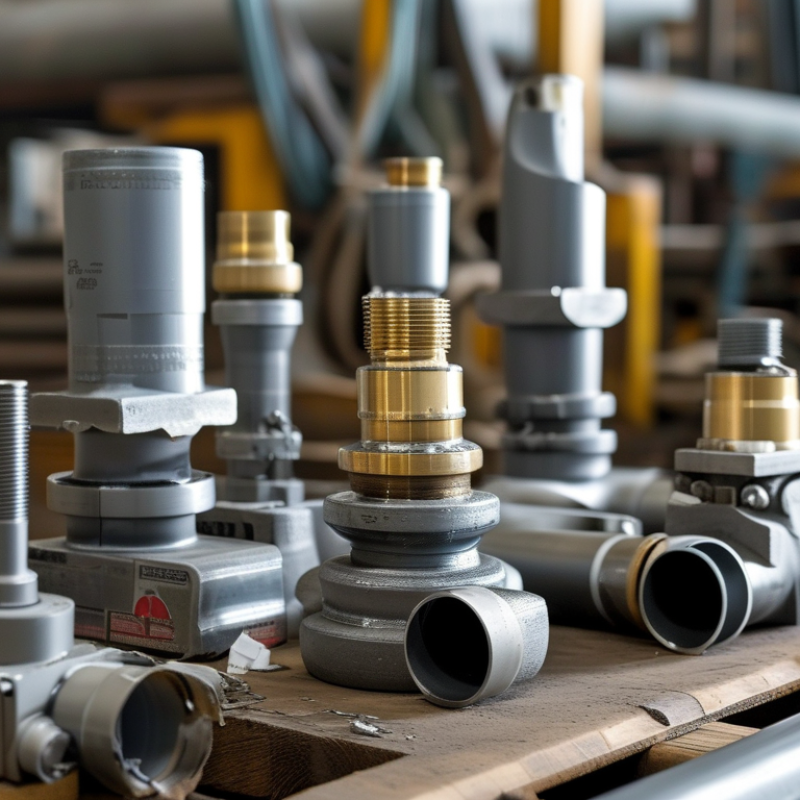
2026 Best Carbon Steel Pipe and Fittings Suppliers

2026 Carbon Steel Pipe Supplier Criteria: Standards, Capacity, and Quality

In 2026, selecting a carbon steel pipe and fittings supplier requires more than comparing prices. Standards should match the project’s service conditions, pressure, temperature, and installation region. Check the exact editions of ASTM, ASME, API, EN, or ISO requirements. Ask for material certificates under EN 10204 3.1. Heat numbers should remain traceable from production to delivery.

Capacity claims also need practical verification. A supplier may advertise large annual output, yet struggle during peak demand. Review production lines, welding equipment, heat treatment capability, and fitting-forming processes. Ask for recent delivery records and realistic lead times. Warehouse stock matters too. It can reduce delays when urgent replacements are needed. A factory visit often reveals more than a sales presentation.

Quality control should include chemical analysis, tensile testing, hydrostatic testing, dimensional inspection, and suitable non-destructive testing. Calibration records must be current. Inspectors should understand wall thickness, ovality, bevel quality, and fitting geometry. Small deviations can create serious installation problems. Experience matters here. Request sample inspection reports and corrective-action records. Do not accept perfect paperwork without checking the physical process. No checklist is perfect. I would also examine communication during a complaint, because reliability appears clearly when something goes wrong. A supplier with transparent records, trained personnel, stable capacity, and responsive technical support is usually safer for long-term procurement.

Carbon Steel Grades: ASTM A53, A106, and API 5L for Key Applications

2026 Best Carbon Steel Pipe and Fittings Suppliers

Carbon steel remains central to energy, water, and process infrastructure. The World Steel Association reported about 1.88 billion tonnes of crude steel production in 2023. That scale supports broad availability, but it does not guarantee correct pipe selection. Buyers still need mill certificates, heat numbers, dimensional checks, and independent inspection.

ASTM A53 suits general-purpose pressure, structural, and utility piping. It is practical for air, water, and steam systems at moderate conditions. ASTM A106 is a seamless grade for elevated-temperature service, including refinery and boiler applications. Its chemistry and tensile requirements support harsher thermal cycles. API 5L targets line-pipe service. Grades such as B, X42, and X52 are selected according to pressure, toughness, and transport conditions. PSL2 demands tighter testing than PSL1.

The U.S. Energy Information Administration continues to identify natural gas and petroleum infrastructure as major components of industrial energy systems. This keeps API 5L relevant for transmission projects. Yet a larger grade is not automatically safer. Wall thickness, corrosion allowance, weld procedure, temperature, and sour-service exposure must be reviewed together. A53 can be wrongly substituted for A106 when temperature rises. That mistake is easy to make. Supplier evaluations should compare traceability, hydrostatic testing, non-destructive examination, and delivery records. Even experienced teams sometimes overvalue price and underestimate documentation gaps. That deserves correction.

2026 Best Carbon Steel Pipe and Fittings Suppliers - Carbon Steel Grades: ASTM A53, A106, and API 5L for Key Applications
Technical sourcing and application reference table
Product / Grade Primary Standard Typical Product Form Key Applications Minimum Yield / Tensile Strength Supplier Qualification Checkpoints
ASTM A53 Grade B ASTM A53/A53M
Seamless or welded pipe
Black or galvanized pipe; commonly supplied in NPS sizes for pressure, mechanical, and structural service Water, air, steam, fire-protection systems, low-pressure process lines, structural columns, and general fabrication Yield: 240 MPa minimum
Tensile: 415 MPa minimum
Confirm pipe type, nominal size, wall thickness, hydrostatic or nondestructive testing, coating condition, and material test report availability
ASTM A106 Grade B ASTM A106/A106M
Seamless pressure pipe
Seamless carbon steel pipe intended for elevated-temperature and pressure service Boiler, refinery, petrochemical, power-generation, steam, hot-oil, and high-temperature process piping Yield: 240 MPa minimum
Tensile: 415 MPa minimum
Check seamless manufacturing route, heat-treatment condition, wall-thickness tolerance, hydrostatic testing, and elevated-temperature design requirements
API 5L Grade B
PSL 1
API Specification 5L
Line pipe
Seamless or welded line pipe for transportation systems; supplied as PSL 1 or PSL 2 Oil, gas, water, slurry, and other pipeline transportation services where line-pipe requirements apply Yield: 245 MPa minimum
Tensile: 415 MPa minimum
Verify PSL level, delivery condition, pipe-end finish, dimensional tolerances, traceability, pressure testing, and applicable sour-service requirements
API 5L X42
PSL 1 / PSL 2
API Specification 5L
Line pipe
Seamless or welded pipe with a higher specified minimum yield strength than Grade B Transmission pipelines, gathering systems, water pipelines, and moderate-to-high-pressure line service Yield: 290 MPa minimum
Tensile: 414 MPa minimum
Confirm PSL designation, impact-test requirements, weld procedure controls, nondestructive examination, bevel geometry, and coating compatibility
API 5L X52
PSL 1 / PSL 2
API Specification 5L
Line pipe
Seamless or welded line pipe for higher-strength transportation applications Long-distance oil and gas transmission, high-pressure water service, and demanding pipeline projects Yield: 359 MPa minimum
Tensile: 455 MPa minimum
Review forming method, weld quality, fracture-toughness data, sour-service qualification, dimensional inspection, and complete heat traceability
Carbon Steel Butt-Weld Fittings ASME B16.9
ASTM A234 WPB
Elbows, tees, reducers, caps, and other seamless or welded butt-weld fittings Process piping, refinery systems, power plants, chemical facilities, and pressure-vessel connections Typical WPB minimums:
Yield: 240 MPa
Tensile: 415 MPa
Check fitting class, schedule, radius, end preparation, heat treatment, dimensional inspection, markings, and compatibility with the selected pipe grade
Forged Carbon Steel Fittings ASME B16.11
ASTM A105/A105M
Socket-weld and threaded fittings, including couplings, unions, elbows, tees, and plugs Compact high-pressure connections, instrumentation branches, utility piping, and industrial maintenance systems ASTM A105 minimums:
Yield: 250 MPa
Tensile: 485 MPa
Verify pressure class, bore dimensions, thread or socket details, heat treatment, hardness, chemical analysis, and material certification
Procurement note: Minimum mechanical values and permitted product forms depend on the applicable standard, grade, product type, size, wall thickness, PSL level, and edition. Always confirm the project specification, current standard edition, inspection plan, and heat-specific material test report before purchase.
Unit reference: Strength values are shown in MPa. 1 MPa = 1 N/mm². ASTM, ASME, and API requirements should be checked against the latest project-approved edition.

Pipe Dimensions: NPS 1/2–48 and ASME Schedule 10–XXS Requirements

Choosing carbon steel pipe and fittings for 2026 projects requires more than comparing prices.

NPS 1/2 through NPS 48 covers a wide dimensional range. NPS is a nominal size, not always the measured outside diameter. For example, small-bore pipe dimensions can confuse inexperienced buyers. Confirm the outside diameter, wall thickness, and end preparation on every datasheet.

ASME Schedule 10 through XXS requirements demand careful checking.

Schedule 10 pipe has a lighter wall than Schedule 40, while XXS provides a much heavier section. However, wall thickness changes with NPS, so the schedule number alone cannot confirm suitability.

A reliable supplier should provide certified dimensions, material chemistry, tensile results, and hydrostatic test information. Fittings must also match the pipe’s outside diameter, wall thickness, pressure class, and connection type.

A practical review should compare drawings with current dimensional standards, such as ASME B36.10M for welded and seamless steel pipe. Butt-weld fittings may require separate dimensional verification.

Small mistakes appear quickly during installation. A socket-weld fitting can expose a mismatch that was invisible during purchasing.

It is tempting to treat every “Schedule 80” item as interchangeable. That assumption needs reconsideration.

Size, manufacturing method, temperature, corrosion allowance, and design pressure still matter. Some schedule combinations are unavailable in certain NPS ranges, so suppliers should confirm production feasibility before order approval. Allow time for this check.

Fitting Standards: ASME B16.9, B16.5, and ASTM A234 Specifications

2026 Best Carbon Steel Pipe and Fittings Suppliers

Selecting carbon steel fittings requires more than comparing prices. The applicable standard must match the connection, pressure class, material, and service temperature. ASME B16.9 governs factory-made wrought butt-welding fittings. It defines dimensions, tolerances, and end preparation. A 90-degree elbow should match the pipe’s outside diameter and wall thickness. Small dimensional errors can create difficult weld alignment.

ASME B16.5 applies to pipe flanges and flanged fittings within its stated size and pressure ranges. It controls flange dimensions, facing, bolt-hole patterns, pressure-temperature ratings, and marking requirements. Check the pressure class carefully. A familiar class number does not guarantee suitability at every temperature. Gasket selection and bolt compatibility also deserve attention.

ASTM A234 covers wrought carbon and alloy steel fittings for moderate and elevated-temperature service. Buyers should request material test reports, heat-number traceability, chemical results, tensile properties, and impact data when specified. Suppliers should also provide dimensional inspection records and clear marking on each fitting. That sounds routine, but paperwork is often incomplete. A certificate alone cannot replace physical inspection. Verify wall thickness, bevel condition, ovality, and surface defects before installation. Standards guide quality; they do not eliminate every manufacturing mistake.

Supplier Evaluation: ISO 9001, MTCs, PMI, Traceability, and Lead Times

For 2026 carbon steel pipe and fittings, evaluate evidence before price. ISO’s Survey 2022 recorded 1,265,216 ISO 9001 certificates across 189 economies. Ask for the current certificate, scope, issuing body, and covered production site. ISO 9001 supports process control; it does not certify every pipe. An expired certificate is not a quality system. Check recent corrective-action records when possible.

Material Test Certificates should show heat number, chemical composition, mechanical results, dimensions, standard, and test methods. Match every MTC to the bundle stencil and packing list. During receiving inspection, use Positive Material Identification on selected pipes, especially after cutting or coating. PMI confirms alloy chemistry, but it does not replace tensile or impact testing. Small details matter. A neat certificate can still hide a weak handoff.

Traceability should survive billet production, forming, welding, heat treatment, testing, and packing. Request a sample traceability map, not only a written promise. Confirm how partial lengths retain their heat identity. Lead-time quotes should separate production, inspection release, documentation, and transport days. The World Steel Association’s October 2024 outlook projected global steel demand at about 1.75 billion tonnes in 2024 and 1.77 billion tonnes in 2025, so capacity pressure can affect schedules. Require a confirmed production slot and escalation contact. “Fast delivery” is not measurable. Suppliers sometimes overpromise; buyers should challenge that politely.

FAQS

: What should buyers check before selecting a carbon steel pipe supplier?

: Check applicable standards, service temperature, pressure, installation region, and delivery capability. Request material certificates and traceable heat numbers. Do not compare prices alone. A cheap quote may hide weak documentation.

Why are heat numbers important?

Heat numbers connect each pipe to its production records. They support chemical analysis, testing, and delivery traceability. The number should remain visible from production through installation. Missing traceability deserves careful review.

How can buyers verify a supplier’s production capacity?

Review welding lines, heat treatment equipment, fitting-forming processes, and warehouse stock. Ask for recent delivery records and realistic lead times. A factory visit can reveal crowded storage or idle equipment. Capacity claims need proof.

What quality tests should carbon steel pipes receive?

Common checks include chemical analysis, tensile testing, hydrostatic testing, and dimensional inspection. Non-destructive testing may also suit the service conditions. Inspect wall thickness, ovality, bevels, and fitting geometry. Small errors can stop installation.

Which carbon steel grade suits general utility piping?

A general-purpose grade may suit water, air, steam, and structural services. Confirm pressure, temperature, wall thickness, and corrosion allowance. Do not substitute it automatically for elevated-temperature service. That shortcut can fail.

When is a seamless pipe grade more suitable?

Seamless pipe can suit elevated-temperature systems, boilers, and demanding process conditions. Review chemistry, tensile performance, thermal cycles, and design pressure together. A higher grade is not always safer. The whole system matters.

What should buyers know about line-pipe grades?

Line-pipe grades support fluid transportation projects. Grade selection depends on pressure, toughness, temperature, and service exposure. Higher testing levels may require tighter inspection and documentation. Ask for complete test records.

How should pipe dimensions and schedules be verified?

Confirm outside diameter, wall thickness, end preparation, and nominal size. Nominal size is not always the measured outside diameter. Schedules from 10 through XXS have different wall thicknesses. Schedule numbers are not interchangeable.

What must be checked when ordering fittings?

Match the fitting to pipe diameter, wall thickness, pressure class, and connection type. Verify geometry and dimensional standards before approval. Socket-weld fittings can expose hidden mismatches. Drawings deserve another look.

How should buyers judge a supplier after a quality complaint?

Review response time, corrective-action records, inspection evidence, and technical communication. Reliable suppliers explain problems clearly and provide practical remedies. Perfect paperwork proves little without process evidence. No checklist catches everything.

Conclusion

Choosing the right Carbon Steel Pipe And Fittings supplier in 2026 requires a clear evaluation of technical capability, product quality, and delivery reliability. Qualified suppliers should support recognized standards for carbon steel grades, including ASTM A53 for general services, ASTM A106 for high-temperature applications, and API 5L for pipeline systems. They should also provide pipe sizes from NPS 1/2 to 48 and ASME Schedule 10 through XXS, enabling selection based on pressure, temperature, and installation requirements.

Fittings should comply with ASME B16.9, ASME B16.5, and ASTM A234 specifications for dependable dimensions, pressure performance, and material compatibility. During supplier assessment, buyers should review ISO 9001 certification, complete material test certificates, positive material identification, heat-number traceability, inspection procedures, and realistic lead times. A supplier that combines consistent manufacturing capacity with transparent documentation and responsive service can help reduce project risks and support long-term system reliability.


Mason

Mason

Mason is a seasoned marketing professional with a deep expertise in the company's offerings and a passion for driving brand awareness. With a strong background in digital marketing strategies, he has an innate ability to connect with diverse audiences and effectively communicate product benefits.......