What is Carbon Steel Square Pipe used for? The answer begins with its shape. Four flat faces and a hollow core give it useful strength without the weight of a solid bar. In fabrication shops, workers cut, weld, and drill these sections to build frames, supports, and equipment stands. A 50-by-50-millimeter tube, for example, can form a compact table leg or machine guard. The right choice still depends on wall thickness, load, span, and connection design.
Structural steel engineer Charlie Carter is known for practical guidance on matching steel members to their intended loads. A concise paraphrase of that principle is: “Choose the section for the load and connection, not appearance alone.” That distinction matters. Square pipe can serve in building frames, gates, handrails, shelving, trailers, and agricultural equipment. It also appears in architectural details, where its clean lines are visible. Some applications need corrosion protection, such as paint or galvanizing, especially outdoors.
Not every square tube suits every job. Thin walls may dent or buckle under concentrated force, while heavier sections add cost and weight. Designers and fabricators should check dimensions, steel grade, weld details, and expected service conditions. A quick visual match is not enough. The small details matter. This guide explores common uses and the practical factors behind choosing Carbon Steel Square Pipe, while noting where its limits deserve a closer look.
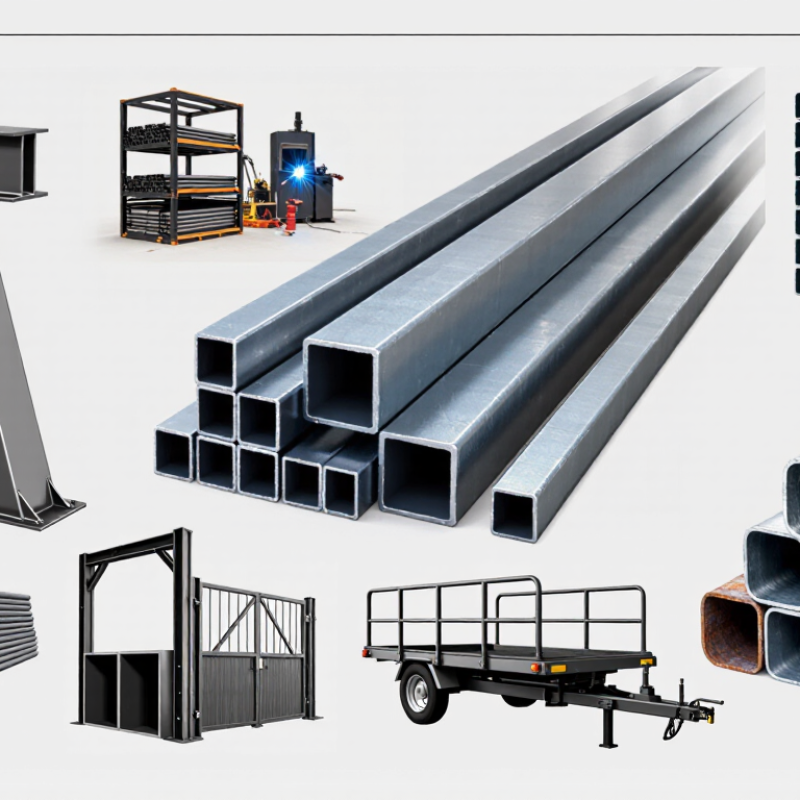
A carbon steel square pipe is a hollow steel section with four flat sides and a square cross-section. In structural specifications, it is often called square tubing or a hollow structural section. “Pipe” can be a trade term; the product’s shape alone does not tell you its intended use.
Carbon steel means iron-based steel whose carbon content and other elements are controlled by its grade. The grade matters. ASTM A500, for example, covers cold-formed welded and seamless carbon steel tubing for structural applications, including square sections.
A clear specification lists the outside dimensions, wall thickness, steel grade, and applicable standard. These details affect strength, weight, fit, and fabrication. On a cut end, the hollow center and wall thickness are easy to inspect; a weld seam may also be visible.
Surface appearance is not a reliable grade test. Nor does carbon steel mean stainless steel: exposed surfaces can corrode without suitable protection.
World Steel Association’s World Steel in Figures 2024 reports roughly 1.89 billion tonnes of crude steel production worldwide in 2023. That figure gives industry scale, not square-pipe output or product quality. Small distinction, big practical difference.
A measured section can still vary within its specified tolerances, so drawings and material certificates should be checked together.
Carbon steel square pipe usually starts as a flat steel coil, not as a solid bar. A mill slits the coil into narrow strips, then feeds each strip through forming rolls. The edges meet, and high-frequency electric resistance welding joins them into a continuous tube. More rolls shape the round tube into a square profile. Sizing stands refine its width and corner geometry before the mill cuts it to length. Heat matters. Too much forming pressure can leave uneven corners or residual stress.
Quality checks follow. Producers may inspect the weld, measure wall thickness and outside dimensions, and test samples for strength. ASTM A500/A500M covers cold-formed welded and seamless carbon steel structural tubing, including square sections. Its requirements help buyers compare specified properties, though the standard does not replace mill-specific inspection records.
The World Steel Association reported 1,882.6 million tonnes of global crude steel production in 2024 in World Steel in Figures 2025; that figure shows the scale of the raw-material industry, not square-pipe output.
Small flaws travel. A pipe can look straight yet still miss a dimensional tolerance, so checking certificates and measured dimensions is practical. The process is efficient, but not perfect: weld quality and corner consistency depend on setup, material condition, and ongoing control.
Carbon steel square pipe is valued for its balance of strength, stiffness, and practical fabrication. Its flat sides sit neatly against plates and brackets, making frames easier to measure and assemble. The hollow section resists bending while using less material than a solid bar of similar size.
That shape matters.
In a workshop, it can simplify a table frame; on a building project, it can support columns, rails, and roof structures.
Carbon steel can also be cut, drilled, and welded with common fabrication methods. Its ductility helps it deform under some stresses rather than fail without warning, though performance depends on the grade, wall thickness, and loading.
Details still matter.
A thin-walled pipe may dent under impact, while a heavier section adds weight and cost. Designers should check load paths, connections, and relevant engineering requirements instead of choosing by outside dimensions alone. Carbon steel can corrode when exposed to moisture, especially at cut edges or damaged coatings. Protective finishes and routine inspection help, but they do not remove the need to consider the environment.
One trade-off is easy to overlook: a strong section is not automatically the right section.
Carbon steel square pipe is commonly used wherever a straight, rigid frame is needed. In building projects, it supports canopies, stairs, partitions, and light structural frameworks. Its flat faces make it convenient to join with plates and brackets. You can also find it in warehouse shelving, machine frames, gates, and agricultural equipment. It is practical. Yet square shape alone does not determine strength; wall thickness, steel grade, and connection design matter.
In workshops, fabricators often choose square pipe for carts, workbenches, and equipment stands because it is easy to cut and assemble. Outdoor uses include fences and greenhouse frames, but moisture can cause rust, especially at cut ends and welded joints. A protective coating may help, though damaged coatings need attention. It is easy to overlook that detail. For load-bearing work, match the pipe dimensions to the design requirements rather than copying a familiar size.
Tips: Check the grade, wall thickness, and finish before buying. For exposed installations, inspect joints and cut edges regularly. If the pipe will carry substantial loads, ask a qualified engineer to verify the design.
| Application | Common Locations or Products | Why Square Pipe Is Used | Practical Considerations |
|---|---|---|---|
| Building and structural framing | Building frames, columns, beams, canopies, and roof supports | Its hollow section provides structural strength with less material than a solid bar, while flat faces simplify connections and fabrication. | Members should be sized and designed for the required loads, connections, and applicable building codes. |
| Industrial equipment and machinery | Machine frames, workstations, equipment stands, and protective guards | The straight sides make it convenient to cut, weld, and attach plates, brackets, and other components. | Wall thickness and steel grade should suit the equipment’s loads, vibration, and operating environment. |
| Fences, gates, and railings | Fence posts, gate frames, handrails, and guardrails | It offers a rigid, uniform shape that is easy to lay out and connect into rectangular frames. | Outdoor installations typically need suitable paint, galvanizing, or another corrosion-protection system. |
| Trailers and transport equipment | Trailer frames, racks, supports, and selected vehicle components | The hollow profile can provide useful stiffness without the weight of a solid section. | Design should account for dynamic loads, fatigue, weld quality, and relevant vehicle requirements. |
| Agricultural structures and equipment | Greenhouse frames, equipment supports, livestock enclosures, and implement frames | Square sections are straightforward to assemble into practical frames and can be readily fabricated. | Moisture, soil, fertilizers, and outdoor exposure can accelerate corrosion if the steel is unprotected. |
| Storage and material handling | Shelving frames, warehouse racks, carts, and support structures | Flat faces make it convenient to mount shelves, wheels, braces, and fittings. | Load capacity depends on section dimensions, wall thickness, span, bracing, and connection details. |
| Furniture and interior fabrication | Table bases, desk frames, benches, and display fixtures | Its clean, geometric profile is easy to combine with wood, glass, or sheet materials. | Edges and welds may need finishing; the steel can be painted or coated to suit the setting. |
| General fabrication and supports | Brackets, frames, equipment bases, and custom welded assemblies | It is widely fabricated using common cutting, drilling, and welding processes. | Choose a suitable grade and section specification for the intended load, fabrication method, and environment. |
What Is Carbon Steel Square Pipe Used For?
How Do Size, Grade, and Finish Guide Pipe Selection?
Carbon steel square pipe, also called square hollow section, appears in frames, columns, equipment stands, and building supports. Start with the load, not the catalog. Measure the clear span, expected forces, connection details, and available installation space. A 50 mm square tube may fit a compact guard frame, while a longer unsupported span may need a larger section or thicker wall. Fit matters, too.
Size affects strength and weight. Wall thickness matters just as much as outside dimensions: thin walls can dent or buckle near bolts, while thicker walls add weight and welding time. For structural applications, check the grade and applicable design requirements. ASTM A500 specifies a minimum yield strength of 46 ksi (315 MPa) for Grade C square and rectangular sections. That figure is a material property, not a safe working-load rating; the whole structure still needs engineering checks.
Finish should match the exposure and maintenance plan. Bare or lightly oiled steel may suit indoor fabrication, but outdoor moisture often calls for a protective coating. ISO 9223 classifies zinc corrosion rates from 0.1 micrometres per year or less in category C1 to 4.2–8.4 micrometres per year in C5. This range shows why “galvanized” alone does not predict service life. Inspect cut edges and welds, too. I have seen finish choices made late, and that can mean extra preparation and cost.
Size, grade, and finish help determine whether square tubing suits a structural frame, support, or general fabrication project.
How to read the chart: Larger sections and thicker walls generally use more steel per meter. Values are theoretical estimates calculated from the listed outside dimensions, wall thickness, and a steel density of 7,850 kg/m³, assuming square corners; actual product mass can vary with corner radii and manufacturing tolerances. These sizes are examples, not a stock-size guarantee.
Choosing a product: Match the outside dimensions and wall thickness to the design loads, connections, and applicable structural requirements. Specify a grade such as ASTM A500 Grade B or C only when it meets the project design specification. Choose a finish for the exposure: uncoated steel may need a protective coating, while galvanizing or a suitable paint system can help protect against corrosion.
Its flat sides sit neatly against plates and brackets. The hollow shape resists bending while using less material than a solid bar. That balance is useful, but it does not guarantee a suitable design.
Steel grade, wall thickness, loading, and connections all matter. A thin wall may dent under impact. Outside dimensions alone are not enough.
It appears in canopies, stairs, partitions, warehouse shelving, machine frames, gates, and equipment stands. A simple workbench frame is one practical example.
It can be cut, drilled, and welded using common methods. Flat faces also make measuring and joining parts easier. Small details still need care.
Yes, including for fences and greenhouse frames. Moisture can cause rust, especially around cut ends and welded joints. Check those spots regularly.
Protective finishes can help shield the surface. Damaged coatings need attention, and routine inspections remain useful. A coating is not a permanent fix.
Match the grade and wall thickness to the design requirements and expected load. Do not simply copy a familiar size. That shortcut can be misleading.
Ask a qualified engineer to review pipe carrying substantial loads. They can assess load paths and connections. Guessing from appearance is risky.
Carbon Steel Square Pipe is a hollow steel section with a square profile, valued for its balanced shape, strength, and versatility. It is typically made by forming steel into a square tube and joining the edges, followed by sizing and finishing processes that help ensure consistent dimensions and surface quality. Its load-bearing capacity, durability, and ease of fabrication make it a practical choice for many structural applications.
It is commonly used in building frames, supports, machinery, fencing, and other fabricated structures. Choosing the right pipe depends on its outside dimensions, wall thickness, steel grade, and finish. These factors influence strength, weight, corrosion resistance, and suitability for indoor or outdoor use. Matching the pipe’s specifications to the demands of a project helps achieve reliable performance and efficient installation.

Kerlimar