Choosing an Erw Carbon Steel Pipe in 2026 requires more than comparing price per tonne. Buyers must connect application, steel grade, wall thickness, welding quality, coating, and traceability. A pipe may look smooth on the rack, yet fail under pressure if its weld seam, ovality, or wall tolerance is poorly controlled.
The World Steel Association’s Short Range Outlook reported global steel demand near 1.8 billion tonnes in 2025. That scale matters. It reflects intense pressure on mills, energy use, raw-material costs, and delivery reliability. The OECD’s Steel Market Developments reports also highlight continuing overcapacity concerns and volatile trade conditions. These factors can influence pipe availability and supplier stability. Market forecasts differ, though. They are useful signals, not purchasing guarantees.
Edwin Basson, Director General of worldsteel, has described steel as “an essential material for a sustainable future.” That principle should guide practical pipe selection. For example, a 6-metre pipe beside a construction site needs clear heat numbers, readable markings, and certificates that match the delivered bundle. ASTM A53, ASTM A500, API 5L, and ISO 3183 may serve different purposes. They should not be treated as interchangeable labels.
The uncomfortable truth is simple: no checklist removes every risk. A low-cost quote can hide inspection gaps. A famous certification can still be poorly verified. This guide examines how to compare Erw Carbon Steel Pipe suppliers in 2026, using standards, mill evidence, inspection records, and real project conditions. The best choice is rarely the cheapest pipe. It is the pipe whose performance can be proven.
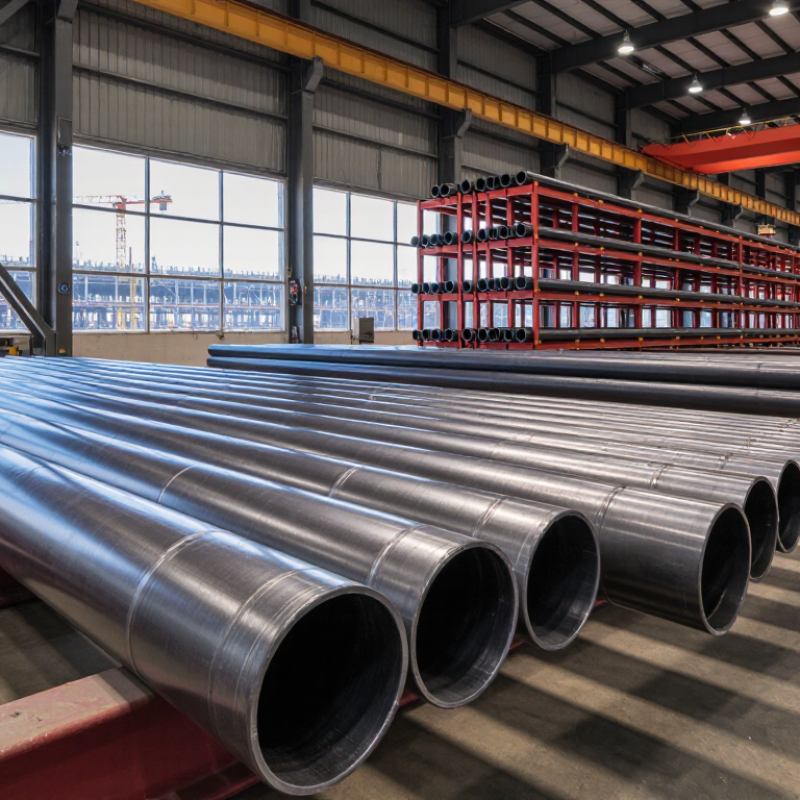
ERW (electric-resistance-welded) carbon steel pipe is made from rolled steel strip, formed into a tube, then joined along one seam using electrical resistance. The process supports consistent dimensions and efficient production. Common uses include building frames, machinery, water systems, and selected gas or oil service. The U.S. Energy Information Administration describes a natural-gas pipeline network of nearly 3 million miles. That scale matters. Not every line, though, uses ERW pipe; material and construction vary by service.
For practical selection, match the pipe grade, outside diameter, wall thickness, and end finish to the design conditions. Check the applicable product standard and confirm how the longitudinal weld is inspected. A pipe suited to a low-pressure water line may not suit a demanding pressure or corrosive environment. Coatings can help limit external corrosion, but they do not replace suitable material selection. One detail is easy to miss: installation loads and handling can damage a good pipe before it enters service.
Tips: Ask for traceable test documentation, including grade and dimensional checks. Inspect the seam and coating on delivery. If service conditions are unclear, pause and verify them with a qualified engineer.
| Selection Factor | What to Check | Useful Reference or Data | Typical Applications |
|---|---|---|---|
| Manufacturing process | Confirm that the pipe is electric-resistance-welded (ERW), with a longitudinal seam formed by resistance heating and pressure. Check the specified inspection and testing requirements for the ordered product. | ERW is a longitudinally welded pipe-making process. Product standards define applicable manufacturing, dimensional, and testing requirements. | Water and other utility services, structural work, mechanical systems, and pipeline service where the selected product specification permits. |
| Product standard and service | Choose a standard that matches the intended use; do not select a pipe based on the ERW process alone. | ASTM A53/A53M covers black and hot-dipped galvanized welded and seamless steel pipe; Type E identifies electric-resistance-welded pipe. API 5L covers line pipe. ASTM A500 covers cold-formed welded and seamless carbon-steel structural tubing. | ASTM A53: commonly specified for general mechanical and pressure applications within its scope. API 5L: pipeline transportation service within the specification. ASTM A500: structural members and construction applications. |
| Grade and required properties | Check the grade, strength requirements, chemistry, delivery condition, and any supplementary requirements stated in the purchase specification. | For example, ASTM A53 Type E includes Grades A and B. Grade names and requirements differ across standards, so grades from different specifications should not be treated as interchangeable. | Select the grade against design calculations, applicable codes, service conditions, and project documentation. |
| Nominal size and outside diameter | Specify the nominal pipe size (NPS) and verify its actual outside diameter and tolerances against the applicable dimensional standard. | Under ASME B36.10M, NPS 2 has a nominal outside diameter of 2.375 in (60.3 mm); NPS 6 is 6.625 in (168.3 mm); NPS 12 is 12.750 in (323.9 mm). | Useful for matching fittings, valves, supports, and connection layouts. |
| Wall thickness and schedule | Confirm the required wall thickness, schedule where applicable, and dimensional tolerances. Account for design pressure, loads, corrosion allowance, and fabrication requirements. | For a given NPS, different schedules have different wall thicknesses and internal diameters. Schedule designation alone does not establish a safe pressure rating for every service. | Pressure piping, water systems, structural members, and mechanical installations, subject to engineering design and the governing code. |
| Pressure, temperature, and fluid | Check operating and design pressure and temperature, fluid properties, applicable code, and any restrictions on the product standard. | Allowable service conditions depend on material properties, dimensions, manufacturing requirements, design rules, and service environment; use the applicable code and engineering calculations. | Process and utility piping only when the specified product and design are suitable for the particular service. |
| Corrosion protection | Specify the required surface condition or protective system, such as black finish, hot-dip galvanizing, or a project-defined coating. Consider internal and external exposure separately. | ASTM A53/A53M includes black and hot-dipped galvanized pipe options. Coating selection and preparation requirements should be stated in the order or project specification. | Outdoor structures, water distribution, and exposed utility lines where corrosion protection is required by the environment. |
| Inspection, testing, and traceability | Review required hydrostatic or nondestructive testing, inspection records, marking, and material documentation against the ordered standard and project requirements. | Test methods and acceptance criteria vary by product standard, grade, size, and purchase requirements. Confirm them in the current applicable edition and order documents. | Critical piping and infrastructure projects that require documented conformity and material traceability. |
| Fabrication and installation | Check weldability, joint type, end finish, fitting compatibility, handling, and installation requirements. Confirm suitability before field welding or other joining operations. | End preparation and dimensional requirements should match the connection design and project specification; verify compatibility with the selected fittings and joining procedure. | Building services, industrial piping, structural frames, and fabricated assemblies. |
Note: References are selection guidance, not a substitute for the applicable standard, current code, engineering design, or project specification. Confirm the required edition, size range, grade, testing, and service suitability before ordering.
Confirm the grade and product specification suit the pipe’s pressure, temperature, and service conditions. Check coil chemistry, edge preparation, weld heat, and forming controls. Details matter.
Match the heat number on the pipe marking to its material certificate, test report, and shipment list. Resolve any mismatch before dispatch. Paper alone is not enough.
Ask for hydrostatic-test records and nondestructive examination details, including methods and acceptance criteria. Check that equipment calibration is current. Keep the records.
No. It describes a quality-management system, not the test results for one pipe. Check the actual inspection records and traceability. A polished certificate can leave gaps.
Select one pipe and follow its heat number from marking to certificate, test report, and shipment list. Small number differences can complicate later checks.
Compare delivered price, inspection fees, packaging, freight, duties, and possible rework. Check the quotation’s validity period, since prices can change. Cheap may cost more.
Clarify the delivery point, loading responsibilities, insurance, and responsibility for delays. Compare the proposed schedule with your required quantity and site dates. A few days matter.
Look for consistent dimensions, clear records, realistic schedules, and responsive defect handling. Ask about replacement stock or independent inspection when project risk justifies it. I might still miss something; inspect the actual pipe.
Choosing the right Erw Carbon Steel Pipe in 2026 starts with understanding how electric resistance welded pipe is made and where it performs best, such as in water, construction, and industrial systems. Identify the intended use before selecting a standard or grade, then confirm the required diameter and wall thickness. These details help ensure the pipe suits the design and installation requirements rather than relying on a general-purpose specification.
Next, match the pipe to operating pressure, temperature, and environmental conditions, including exposure to moisture or corrosive surroundings. Review manufacturing controls, inspection and testing records, certifications, and traceability so the supplied product can be verified against the stated requirements. When comparing suppliers, consider more than the initial price: assess product consistency, delivery schedule, terms, and support. A balanced evaluation of technical suitability, quality evidence, and long-term value can help reduce avoidable replacement and project delays.

 Kerlimar