Galvanized Carbon Steel Pipe remains a practical choice where steel strength and corrosion resistance must work together. It consists of carbon steel with a protective zinc coating, usually applied through hot-dip galvanizing. The coating creates a physical barrier. It also offers sacrificial protection when small areas become exposed.
Dr. Thomas J. Langill, a recognized galvanizing-industry metallurgist, states, “Zinc protects steel through barrier and cathodic protection.” This principle explains why the pipe performs well in outdoor structures, water distribution systems, agricultural facilities, fire-protection networks, and industrial utility lines. A bright zinc surface can resist rain, humidity, and moderate atmospheric exposure. Installers can also thread, cut, and connect many pipe grades using familiar methods. That practical experience matters on busy construction sites.
Not every application is suitable.
Designers must consider water chemistry, operating temperature, soil conditions, and required pressure ratings. Some aggressive fluids can consume zinc quickly. Internal corrosion may also develop in stagnant water or poorly maintained systems. Potable-water use requires compliance with applicable regional standards and project specifications. Fire-sprinkler installations need approved components and professional hydraulic design. These details are easy to overlook.
A reliable article about Galvanized Carbon Steel Pipe should therefore examine more than its low maintenance appeal. It should compare service environments, coating thickness, connection methods, and expected lifespan. Field inspection remains valuable. A pipe may look sound outside while corrosion advances internally. Used thoughtfully, galvanized pipe offers durable and economical service. Used casually, it can create avoidable replacement costs.
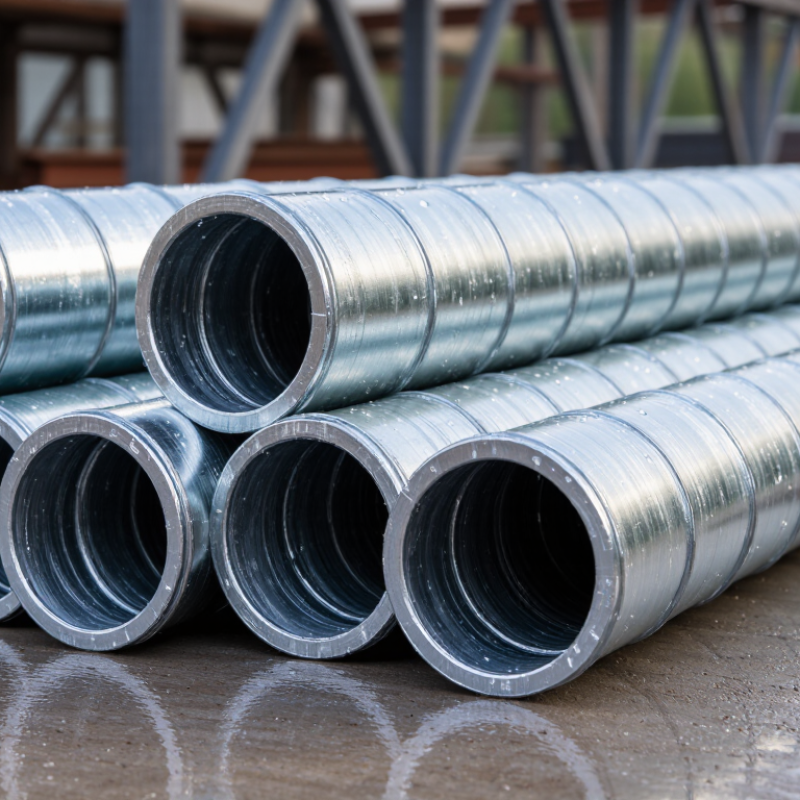
Galvanized carbon steel pipe is used for structural supports, fencing, handrails, irrigation lines, and exposed mechanical services. Its zinc coating creates a barrier against moisture and offers sacrificial protection when the surface is scratched. That protection matters in workshops, outdoor racks, and construction sites where bare steel can rust quickly.
ISO 1461 sets hot-dip galvanized coating requirements for fabricated iron and steel products. For applicable steel sections over 6 mm thick, the average coating thickness is typically at least 85 μm. The local minimum is lower, so one measurement should never represent the entire pipe. Coating thickness depends on steel chemistry, wall thickness, drainage, and dipping practice. A bright surface is useful evidence, but it does not prove uniform protection.
Check the coating with a calibrated magnetic thickness gauge, especially near welds, ends, and fittings. Look for bare patches, excessive lumps, and blocked openings before installation. Galvanized pipe can perform for many years, but soil chemistry, standing water, and industrial exposure may shorten its life. Potable-water or fire-service applications also require project-specific approval; galvanized does not mean universally suitable. I would verify the pipe standard and coating certificate instead of relying on appearance alone. Small mistakes here become expensive corrosion later.
| Application or Data Dimension | Typical Use or Requirement | Technical Explanation | Important Consideration |
|---|---|---|---|
| Water distribution and service lines | Non-potable water, irrigation, drainage, and general utility piping | The zinc layer provides a barrier between the carbon-steel substrate and moisture, while zinc corrosion products can help slow further attack. | Suitability for drinking water depends on local regulations, water chemistry, and an approved product specification. |
| Outdoor structural and utility supports | Handrails, posts, frames, barriers, equipment supports, and exposed service pipework | Hot-dip galvanizing coats accessible steel surfaces with metallurgically bonded zinc-iron alloy layers and an outer zinc layer. | Cut edges, welds, and damaged areas require suitable repair treatment to maintain corrosion protection. |
| Agricultural and farm systems | Watering systems, livestock equipment, fencing components, and general farm utilities | Galvanized carbon steel is commonly selected where intermittent wetting and outdoor exposure are expected. | Fertilizers, manure, acids, and persistent wet deposits can accelerate zinc consumption. |
| Construction and temporary installations | Scaffolding components, temporary barriers, site utilities, and exposed mechanical services | The coating reduces atmospheric corrosion during handling, storage, installation, and outdoor service. | Threaded connections and fit-up dimensions should be checked because galvanizing adds coating thickness. |
| Electrical and cable-support infrastructure | Conduit, support frames, brackets, and outdoor cable-management structures | Zinc protection improves resistance to atmospheric moisture and helps extend the maintenance interval in many outdoor environments. | Electrical design, earthing, and compatibility with dissimilar metals must be assessed separately. |
| Hot-dip galvanized coating process | Immersion of prepared carbon-steel pipe or fabricated steel in molten zinc | The steel is cleaned, fluxed or otherwise prepared, immersed in molten zinc at approximately 450°C, withdrawn, and inspected. | Drainage and vent holes may be necessary for hollow sections to prevent trapped chemicals, pressure, or incomplete coating. |
| ISO 1461 coating thickness for steel >6 mm | Average coating thickness: ≥85 μm | For articles with steel thickness greater than 6 mm, ISO 1461 specifies a minimum average galvanized coating thickness of 85 μm and a minimum local thickness of 70 μm. | The 85 μm value is not universal for every pipe size or wall thickness; the applicable standard and steel thickness must be confirmed. |
| ISO 1461 coating thickness for 3–6 mm steel | Average coating thickness: ≥70 μm | ISO 1461 specifies a minimum local coating thickness of 55 μm for steel articles in this thickness range. | Measurements are normally evaluated using the sampling and test methods defined by the applicable standard. |
| ISO 1461 coating thickness for 1.5–3 mm steel | Average coating thickness: ≥55 μm | The specified minimum local coating thickness is 45 μm for this steel-thickness category. | Thin-wall products may be governed by a separate pipe or product standard rather than ISO 1461 alone. |
| Cathodic or sacrificial protection | Protection of exposed steel at small scratches or discontinuities | Zinc is more anodic than steel in many environments, so it can preferentially corrode and provide sacrificial protection near minor damaged areas. | This protection is limited by coating damage, electrolyte conditions, electrical continuity, and the size of the exposed steel area. |
| Environments requiring caution | Strong acids, highly alkaline solutions, seawater splash zones, and continuously wet deposits | Aggressive chemical or marine conditions can consume zinc more rapidly than ordinary atmospheric exposure. | Specify corrosion testing, coating repair, isolation, lining, or an alternative material when exposure conditions are severe. |
| Inspection and quality checks | Visual inspection, coating-thickness measurement, and verification of defects | Inspection confirms surface coverage, adhesion-related defects, bare areas, excessive roughness, and compliance with the specified thickness. | Acceptance criteria should identify the governing product standard, sampling plan, measurement method, and repair procedure. |
Note: ISO 1461 coating-thickness values apply to hot-dip galvanized fabricated iron and steel articles within the standard’s scope. Pipe products may also be controlled by a dedicated pipe specification, so the applicable standard should be confirmed before procurement.
It carries water, compressed air, and low-risk process fluids. It also supports fencing, handrails, irrigation lines, and outdoor structures.
Zinc blocks moisture from reaching the steel. It also provides sacrificial protection when scratches expose small areas.
For sections over 6 millimetres thick, the average coating often needs to reach at least 85 micrometres. One reading is not enough.
Use a calibrated magnetic thickness gauge. Check near welds, pipe ends, fittings, and visibly uneven areas.
No. A bright surface may still hide thin or uneven coating. I would verify the certificate and measurements.
Look for bare patches, heavy lumps, blocked openings, and damaged threads. Small defects can become expensive corrosion points.
Check pressure rating, wall thickness, pipe schedule, and allowable stress. Above about 60°C, zinc compatibility needs engineering review.
Match diameter to flow, velocity, and pressure loss. A larger pipe may reduce friction but increase material and installation costs.
Service life depends on moisture, soil chemistry, chlorides, and acidic condensate. Some atmospheric environments may support over 50 years, but that is not a promise.
No. These applications need project-specific approval. Galvanized does not mean universally suitable.
Galvanized Carbon Steel Pipe is widely used where reliable strength and improved corrosion resistance are needed. Its zinc coating creates a protective barrier that helps shield the steel from moisture and atmospheric exposure. Under ISO 1461, the average coating thickness may be required to reach at least 85 μm, providing durable protection for many demanding environments. These pipes are commonly installed in water, air, and gas lines, with ASTM A53 covering pipe sizes from NPS 1/8 through 26.
Beyond fluid transport, galvanized pipe is suitable for structural supports, railings, agricultural irrigation systems, and greenhouse frameworks. ASTM A53 Grade B offers a yield strength of approximately 240 MPa, supporting many practical construction applications. When selecting a pipe, users should evaluate operating pressure, temperature, diameter, coating requirements, and applicable standards. Proper sizing and specification help ensure safe, efficient, and long-lasting performance in both indoor and outdoor systems.

 Kerlimar