10 Tips for Buying Carbon Steel Welded Pipe

Time:2026-10-07 Author:Amelia
0%

Buying Carbon Steel Welded Pipe is not merely a price comparison. It is a decision about pressure, corrosion, welding quality, and long-term reliability. A pipe may look flawless under warehouse lights, yet its seam, wall thickness, or documentation can reveal serious differences. The right choice depends on service conditions, applicable standards, and traceable manufacturing records.

David J. Kotecki, a respected welding engineer and author, often stresses a practical principle: “The weld is only as good as the preparation.” That reminder belongs at the center of every purchasing decision. Before selecting a supplier, buyers should define the medium, temperature, operating pressure, pipe size, schedule, and installation environment. ASTM A53, ASTM A106, and API 5L may serve different applications. They should never be treated as interchangeable labels. Request mill test certificates, dimensional reports, chemical results, and non-destructive examination records. Check whether the stated grade matches the project specification. Small details matter.

Look closely.

A reliable supplier should explain seam-welding methods, heat treatment, end finishing, coating options, and inspection procedures. Examine pipe ends for dents, laminations, and uneven bevels. Confirm that packaging will protect the surface during transport. Cost remains important, but a cheaper pipe can create higher cutting, repair, and replacement expenses. No checklist is perfect. Human inspection can miss hidden flaws, especially when records are incomplete. That is why independent verification may be worthwhile for critical systems. These ten practical tips will help buyers compare Carbon Steel Welded Pipe with greater confidence, clearer evidence, and fewer expensive assumptions.
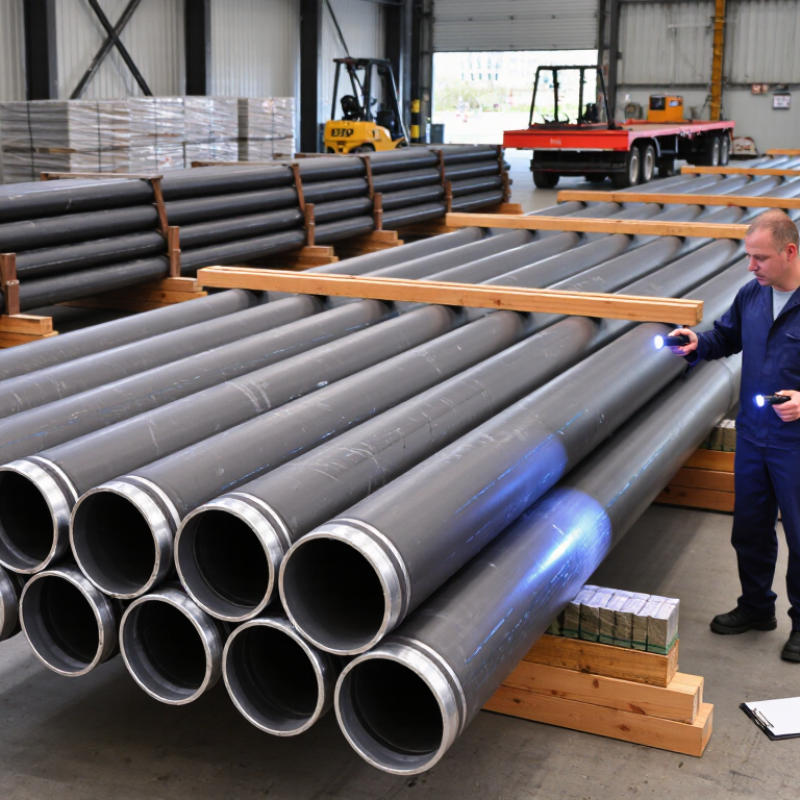
10 Tips for Buying Carbon Steel Welded Pipe

Define the Required Pipe Grade, Size, and Application

Before requesting a quotation, define the pipe’s grade, size, and working environment. A practical specification should state the outside diameter, wall thickness, length, end finish, and tolerance. Do not write only “carbon steel welded pipe.” That description is incomplete.

Grade selection depends on service conditions. ASTM A53 commonly suits general water, air, and low-pressure mechanical service. ASTM A106 is intended for higher-temperature applications. Line-pipe service may require an API 5L specification instead. ASME B36.10M helps standardize nominal pipe sizes and wall dimensions. Check pressure, temperature, fluid chemistry, and corrosion allowance together. A thicker wall is not automatically safer.

Size should follow flow demand, not habit. An oversized pipe increases material and support costs. An undersized pipe can create excessive pressure loss and noise. The World Steel Association’s World Steel in Figures 2024 reported approximately 1.89 billion tonnes of crude steel production in 2023. This scale shows the industry’s capacity, but it does not guarantee that every pipe meets your project needs. Mill test reports, welding procedures, hydrostatic test results, and dimensional inspection records remain essential. I have seen buyers overlook internal diameter after selecting the correct nominal size. That mistake can affect pumps and fittings. Recheck the drawing. Small details matter.

Check Manufacturing Standards, Welding Quality, and Surface Condition

When buying carbon steel welded pipe, begin with the manufacturing standard, not the quoted price. ASTM A53, ASTM A500, and ISO 3183 cover different applications, dimensions, and testing requirements. Match the standard to pressure, temperature, load, and service medium. The World Steel Association reported about 1.89 billion tonnes of crude steel production in 2023, yet volume does not guarantee consistent pipe quality. Request the mill test certificate, heat number, chemical composition, tensile results, and dimensional records. Check traceability.

Tip 1: Verify the standard edition and acceptance criteria.

Welding quality deserves direct evidence. Ask whether the process uses qualified procedures and certified welders under a quality system such as ISO 3834. Review ultrasonic or radiographic inspection records, when specified by the purchase order. Look for smooth bead transition, consistent reinforcement, and no visible undercut, cracks, or arc strikes. A perfect-looking bead can still hide internal defects. That is the difficult part. Require repair procedures and retest results, not verbal assurances.

Tip 2: Inspect sample welds before shipment.

Surface condition affects storage and service life. Check for deep pitting, laminations, oil, loose scale, and uneven coating. Measure wall thickness at several points, especially near the weld and pipe ends. AMPP surface-preparation guidance emphasizes cleanliness and profile before coating, but buyers sometimes inspect only color. That is a mistake. Take dated photographs, record moisture exposure, and confirm packaging protects bevels from impact. I would also allow a small sampling error in the plan, because inspection is never perfectly uniform.

Compare Wall Thickness, Dimensions, and Tolerance Requirements

When buying carbon steel welded pipe, compare wall thickness before comparing price. A pipe marked 6 mm may not measure 6 mm everywhere. Welding, forming, and mill tolerance can create local variation. Ask for nominal thickness, minimum permitted thickness, and the measurement method. Use ultrasonic checks on samples, especially near the weld seam. Thin areas can reduce pressure capacity and shorten service life. Do not rely on a catalog line alone.

Dimensions need equal attention. Confirm outside diameter, inside diameter, length, ovality, straightness, and end preparation. A 219 mm outside diameter may not fit a connection designed around a tighter range. For flanged systems, even small dimensional differences can complicate alignment. Check whether the stated length includes bevels or plain ends. This detail is often missed. It should not be.

Tolerance requirements must match the actual installation. Request the applicable material standard, inspection records, heat number, and mill test certificate. Compare the certificate with the pipe markings during receiving inspection. I have seen buyers accept correct thickness but overlook excessive ovality. That created fitting problems later. A practical check should include several points along each pipe, not only one end. Tolerance is not decoration. It affects welding, assembly, flow space, and long-term reliability. My checklist is useful, but it still needs adjustment when service conditions change.

Evaluate Supplier Credentials, Testing Records, and Product Traceability

10 Tips for Buying Carbon Steel Welded Pipe

Supplier credentials deserve more than a logo or polished website. World Steel Association’s World Steel in Figures 2024 reported 1.89 billion tonnes of crude steel production in 2023. That scale increases the risk of mixed materials and incomplete records. Check business registration, manufacturing location, quality certifications, welding qualifications, and recent customer references. ISO’s Survey 2022 recorded 1,265,216 ISO 9001 certificates worldwide, but certification alone does not prove consistent pipe quality. Request the latest audit scope and verify that it covers the relevant production site.

Ask for sample mill test reports before placing a purchase order. Each report should identify the heat number, chemical composition, tensile results, yield strength, elongation, dimensions, and hydrostatic test status. Confirm the testing method and laboratory competence. ISO/IEC 17025 accreditation can support confidence in test results, although sampling still has limits. It is not perfect.

Product traceability should follow the pipe, not merely the invoice. Match the heat number on the pipe stencil, bundle tag, certificate, inspection report, and shipping documents. Review weld seam inspection records, calibration dates, non-destructive testing results, and dimensional checks. Request photographic evidence when storage conditions matter. A copied heat number can weaken an otherwise strong file. Suppliers may make honest documentation mistakes, so compare records independently before acceptance. Keep a controlled record of approvals, deviations, and retesting decisions.

Minimum yield-strength values shown here are representative requirements for commonly specified carbon-steel pipe grades. During supplier evaluation, confirm the exact standard edition, material grade, mill test certificate, heat number, inspection results, and traceability records for each purchase order.

Review Pricing, Delivery Terms, Storage, and Long-Term Service Needs

When buying carbon steel welded pipe, price is only the opening figure. The World Steel Association’s April 2025 Short Range Outlook forecasts global steel demand at 1.749 billion tonnes in 2025 and 1.785 billion tonnes in 2026. That volume supports demand, but regional costs can still shift with raw materials, energy, freight, and currency movements. Request a validity period, material surcharge formula, inspection charges, and payment milestones. A low quote can still be expensive.

Delivery terms deserve careful review. Specify pipe length tolerance, bundling, markings, loading photos, and the agreed Incoterms 2020 rule. Confirm whether transport insurance, customs clearance, unloading, and port storage are included. The World Bank Commodity Markets Outlook has repeatedly highlighted commodity-price volatility, so avoid relying on verbal freight promises. Build a realistic buffer for inspection and weather delays. Small omissions become costly.

Storage affects service life before installation. Keep bundles on raised supports, away from standing water, and provide ventilation under protective covers. Do not seal damp pipe tightly. Check coating condition monthly, especially near coastal sites. For long-term service, retain mill certificates, weld records, dimensional reports, and traceability tags. Ask for a documented inspection and replacement process. ISO 9001 certification supports process control, but it does not replace product inspection. That distinction is often missed. The uncomfortable part is that buyers sometimes optimize the purchase price while underestimating corrosion, handling damage, and future replacement access. Recheck those assumptions.

10 Tips for Buying Carbon Steel Welded Pipe - Review Pricing, Delivery Terms, Storage, and Long-Term Service Needs

No. Buying Tip Key Dimension to Review Practical Guidance Typical Commercial Reference Risk if Overlooked Priority
1 Define the application first Fluid, pressure, temperature, and service environment Confirm whether the pipe will be used for water, air, oil, structural service, steam, or another medium. Select the material grade and manufacturing specification accordingly. Common carbon steel grades include ASTM A53 and ASTM A106, but the required standard depends on the service. Incorrect material selection may cause premature corrosion, leakage, or non-compliance with the project specification. Critical
2 Verify size and wall thickness Nominal pipe size, outside diameter, wall thickness, and length Compare the quotation with the approved pipe schedule or calculated design thickness. Check whether lengths are random, fixed, or cut to order. Standard commercial lengths are often approximately 5.8 m or 11.8 m, subject to production and transport limits. A lower wall thickness can reduce cost but may fail pressure, structural, or corrosion-allowance requirements. Critical
3 Compare total delivered cost Material price, cutting, coating, packing, freight, duties, and inspection Request a line-item quotation and compare the same grade, size, thickness, quantity, delivery location, and commercial terms. Indicative carbon steel welded pipe prices can vary widely, commonly around USD 600–1,500 per metric ton depending on specification and market conditions. A low unit price may hide freight, certification, coating, handling, or import costs. High
4 Clarify delivery terms Incoterm, lead time, shipment method, port, and delivery schedule Confirm whether the price is EXW, FOB, CIF, or delivered. Define production time, inspection time, transit time, and acceptable partial shipments. Standard production may take about 3–8 weeks, excluding testing, customs clearance, and inland delivery. Unclear responsibilities can result in demurrage, missed installation dates, or unexpected logistics charges. High
5 Check welding and inspection requirements Weld type, weld quality, hydrostatic test, dimensional tolerance, and NDT Specify required tests such as hydrostatic testing, ultrasonic testing, radiographic testing, visual inspection, and chemical or mechanical testing. Inspection requirements should be stated in the purchase order and linked to the applicable ASTM, API, EN, or project standard. Insufficient testing may allow weld defects, dimensional variation, or undocumented material to reach the job site. Critical
6 Plan corrosion protection Bare, painted, galvanized, lined, or externally coated surface Match the surface treatment to humidity, soil contact, chemicals, marine exposure, and operating temperature. Confirm coating thickness and repair procedures. Galvanizing is commonly used for atmospheric protection, while paint or engineered coatings may be selected for more demanding environments. Unprotected carbon steel can develop flash rust during transport or storage, especially in humid or coastal conditions. High
7 Prepare proper storage conditions Drainage, ventilation, stacking, end protection, and contact with soil Store pipe on raised supports, keep it away from standing water and corrosive materials, use suitable separators, and avoid unstable stacking. Outdoor storage should include drainage and protective covering that allows air circulation rather than trapping condensation. Poor storage can cause corrosion, ovality, coating damage, contamination, and handling injuries. High
8 Confirm documentation and traceability Material certificates, heat numbers, test reports, packing list, and markings Require identification on bundles or individual pipes and ensure certificates can be matched to the delivered heat, size, grade, and quantity. A material test certificate commonly records chemical composition, tensile properties, yield strength, elongation, and test results. Missing traceability can delay acceptance, installation, payment, or future failure investigation. High
9 Review installation compatibility End finish, bevel angle, coupling or flange compatibility, and field welding needs Confirm whether the pipe requires plain ends, beveled ends, threaded ends, grooves, flanges, or special dimensions for field assembly. Common butt-welding preparation uses a bevel of approximately 30° with a small root face, subject to the governing specification. Incompatible ends can increase cutting, re-beveling, welding, and alignment costs at the job site. High
10 Evaluate long-term service support Warranty, replacement availability, technical support, spare quantity, and claims process Agree on warranty scope, defect notification periods, replacement procedures, technical records, and support for future extensions or repairs. For long-life systems, retain a small reserve quantity and preserve certificates, drawings, inspection records, and coating information. Short-term savings may lead to higher lifecycle costs if replacement pipe, documentation, or technical assistance is difficult to obtain. High
Note: Prices, lead times, testing requirements, and delivery conditions are indicative and should be confirmed against the applicable project specification, current market conditions, destination regulations, and negotiated purchase terms.

FAQS

What details should a pipe quotation request include?

State the outside diameter, wall thickness, length, end finish, grade, application, and tolerance. A vague description creates avoidable confusion.

How should pipe grade be selected?

Match the grade to pressure, temperature, fluid chemistry, and corrosion allowance. General water service differs from high-temperature service. A thicker wall is not automatically safer.

Why should pipe size follow flow demand?

Size should reflect required flow, pressure loss, noise, and fitting connections. An oversized pipe raises material and support costs. An undersized pipe may strain pumps.

Is nominal size enough for ordering welded pipe?

No. Recheck the internal diameter, wall thickness, and drawing dimensions. Nominal size can hide important differences. Small errors matter.

Which supplier records should buyers request?

Request business details, manufacturing location, quality certificates, welding qualifications, and recent customer references. A polished website proves very little.

What should a mill test report contain?

It should show the heat number, chemical composition, tensile results, yield strength, elongation, dimensions, and hydrostatic test status. Check the testing method too.

How can pipe traceability be verified?

Match the heat number on the pipe, bundle tag, certificate, inspection report, and shipping documents. Do not rely on the invoice alone. Compare records independently.

What inspection evidence is useful before acceptance?

Review weld inspection records, non-destructive testing results, calibration dates, dimensional checks, and photographs when storage matters. The process is not foolproof. Keep approval and retesting records controlled.

Conclusion

Buying Carbon Steel Welded Pipe requires more than comparing prices. Start by defining the required steel grade, pipe size, pressure rating, temperature range, and intended application so the product can perform safely and reliably. Confirm that the manufacturer follows appropriate production standards, uses consistent welding procedures, and provides pipes with a clean, uniform surface free from visible defects. Pay close attention to wall thickness, outside diameter, length, and permitted tolerances, since even small dimensional differences can affect installation and system performance.

A dependable supplier should be able to provide clear credentials, inspection reports, testing records, and product traceability from raw material to delivery. Buyers should also review pricing together with payment terms, lead times, packaging, transportation, and after-sales support rather than focusing only on the initial cost. Proper storage conditions and long-term maintenance requirements should be considered in advance. By evaluating technical specifications, quality controls, documentation, logistics, and service needs as a complete package, purchasers can select Carbon Steel Welded Pipe that offers consistent quality, dependable performance, and better overall value.


Amelia

Amelia

Amelia is a seasoned marketing professional with a wealth of expertise in our company’s core offerings. With an unwavering passion for driving growth and innovation, she plays a pivotal role in shaping our marketing strategies and enhancing brand visibility. A key aspect of her responsibilities......