China Top PTFE Lined Carbon Steel Pipe Manufacturers

Time:2026-09-22 Author:Aria
0%

China has become a significant source of industrial piping for chemical, pharmaceutical, semiconductor, and water-treatment projects. Among these products, the Ptfe Lined Carbon Steel Pipe combines a strong outer structure with a chemically resistant inner surface. This design helps manage acids, alkalis, solvents, and other demanding fluids.

Selecting a leading manufacturer requires more than comparing prices. Experienced suppliers should explain PTFE lining thickness, carbon steel grades, flange dimensions, operating temperatures, and pressure limits. They should also provide material certificates, lining inspection records, and traceability from raw material to finished pipe. Factory visits can reveal practical details, including clean assembly areas, controlled welding, and careful flange protection.

Reliable manufacturers normally test each pipe before shipment. Typical checks may include visual inspection, dimensional measurement, hydrostatic testing, and electrical holiday detection. These steps can identify pinholes, uneven lining, or damaged sealing surfaces. A supplier serving international projects should understand relevant ASTM, ASME, DIN, or customer-specific requirements. Certification alone is not enough.

Real projects still expose limitations. A pipe suitable for dilute acid may fail under high temperature or vacuum conditions. Published specifications may also omit installation details. Therefore, buyers should request complete drawings, test procedures, packing photographs, and references from comparable applications. No manufacturer is best for every process. The right choice depends on media concentration, temperature, pressure, connection design, delivery control, and after-sales support. This guide examines China’s top Ptfe Lined Carbon Steel Pipe manufacturers through those practical criteria, not through marketing claims alone.
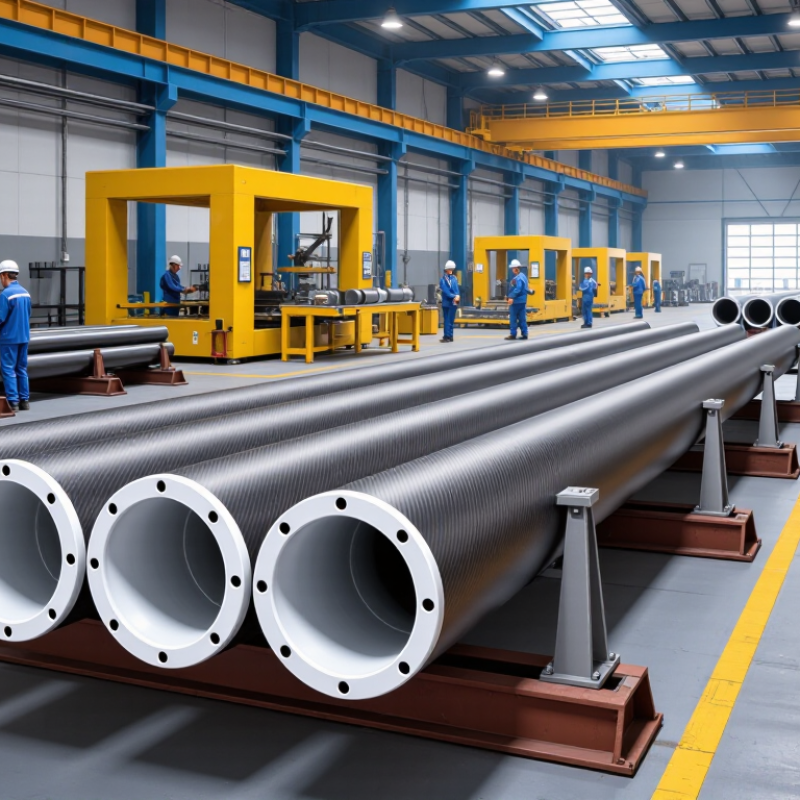
China Top PTFE Lined Carbon Steel Pipe Manufacturers

PTFE-Lined Carbon Steel Pipes: Structure, Materials, and Key Properties

PTFE-Lined Carbon Steel Pipes: Structure, Materials, and Key Properties

A PTFE-lined carbon steel pipe combines a strong outer shell with a chemically resistant inner surface. The carbon steel body carries pressure, weight, and installation loads. Inside, a PTFE tube separates the process fluid from the metal. Many designs use flared PTFE ends, creating a sealing surface at the flange. The liner may not be bonded continuously to the steel. This detail affects vacuum service and thermal movement. PTFE offers excellent resistance to acids, alkalis, solvents, and aggressive salts. It also has a low-friction surface, which can reduce deposits.

Performance depends on more than chemical compatibility. Temperature changes can make PTFE expand much more than carbon steel. Poor allowance for movement may cause wrinkles, stress, or flange leakage. Liner thickness, pipe diameter, operating pressure, and vacuum conditions require technical review. Inspection should include visual checks, dimensional measurements, and electrical holiday testing. Hydrostatic testing may also be appropriate. No design is perfect. Actual media concentration and cycling frequency can expose weaknesses missed by simple charts.

Tips: Confirm the chemical data before selecting the liner. Check temperature peaks, not only normal operating values. Support long pipe sections carefully. Avoid sharp tools near exposed PTFE. Inspect flared ends for cuts, uneven contact, or deformation. If vacuum service matters, request documented vacuum limits and test records. Supplier experience helps, but verified data matters more.

How PTFE Lining Is Applied to Carbon Steel Pipes

China Top PTFE Lined Carbon Steel Pipe Manufacturers

PTFE lining is applied after the carbon steel pipe is inspected, cleaned, and machined. Workers remove rust, oil, and sharp edges before fitting the liner. The PTFE tube is then inserted, expanded, or molded against the steel wall. Flared ends create the sealing surface at each flange. Some factories use vacuum forming or pressure-assisted fitting. The process demands controlled heating, because PTFE expands and contracts more than steel. ASTM F1545 covers fluoropolymer-lined piping and highlights the importance of liner integrity, dimensional control, and testing.

After installation, inspectors check pinholes, thickness, flange alignment, and electrical continuity. Spark testing can detect small defects without cutting the liner. PTFE commonly serves across approximately -200°C to 260°C, but the actual limit depends on pressure, liner design, and chemical exposure. ISO 13000 data identifies PTFE as highly resistant to many aggressive chemicals. Still, it is not universally resistant. Permeation, creep, and damage during transport remain practical concerns. One missed edge can become an expensive failure.

Tips: Request test records, liner thickness measurements, and vacuum checks. Confirm the operating temperature and pressure together, not separately. Ask for a sample cross-section when quality is uncertain. Some suppliers focus heavily on appearance. That is not enough. A better review includes weld inspection, flange-face protection, and installation guidance. Mistakes often occur during fitting, not production.

Performance Standards for PTFE-Lined Carbon Steel Pipe Manufacturers

Reliable PTFE-lined carbon steel pipe manufacturers should prove performance through measurable, repeatable controls. Their systems should reference applicable ASTM, ASME, and ISO requirements where relevant. Dimensional checks must cover outside diameter, wall thickness, flange alignment, and liner length. Small errors can create installation stress.

The PTFE lining needs careful inspection before shipment. Manufacturers commonly use visual examination, spark testing, hydrostatic testing, and vacuum checks when the design requires them. Testing should detect pinholes, cracks, blisters, and weak flange flares. Material certificates should identify the PTFE grade, carbon steel specification, batch number, and inspection results. Experienced manufacturers also evaluate temperature cycling, chemical compatibility, pressure changes, and permeation risks. A perfect-looking pipe can still fail after repeated thermal movement. This is where production records matter.

Tips: Ask for a documented quality plan, not only a test certificate. Confirm the design temperature, operating pressure, vacuum condition, and chemical concentration. Check whether the manufacturer performs liner inspection after forming and machining. Request sample reports from recent production, with sensitive commercial details removed. Do not assume a thicker liner always means better service. The correct grade and construction are more important. Manufacturers should also explain repair limits, storage conditions, and field installation guidance. Some specifications remain unclear, and that deserves review before ordering.

Reference Pressure Classes for PTFE-Lined Carbon Steel Piping

The chart shows commonly specified EN flange nominal pressure classes from PN10 to PN100. These values are standardized nominal designations in bar, not guaranteed operating pressures for PTFE-lined carbon steel pipe. Actual pressure limits must be verified against temperature, flange material, liner design, pipe size, and the applicable standard.

How to Evaluate China-Based PTFE-Lined Pipe Manufacturers

China Top PTFE Lined Carbon Steel Pipe Manufacturers

How to Evaluate China-Based PTFE-Lined Pipe Manufacturers

Selecting a China-based PTFE-lined pipe manufacturer requires evidence, not attractive catalog images. The IMPACT study commissioned by NACE estimated global corrosion costs at about US$2.5 trillion annually, equal to 3.4% of global GDP. That figure makes lining quality a process-safety decision, not merely a purchasing detail. Ask for material certificates, liner thickness records, weld procedures, and batch traceability. ASTM F1545 compliance can provide a useful reference for plastic-lined ferrous pipe. However, a certificate alone is not enough.

Inspect how the steel surface is prepared before lining. Request records for blasting profile, cleanliness, heating temperature, and dimensional checks. Ask whether each pipe receives holiday testing, adhesion testing, and vacuum inspection. The inspection method should match the service pressure, temperature, and chemical concentration. Grand View Research estimated the global PTFE market at roughly US$3.5 billion in 2023, with continued growth expected through 2030. Rising demand may increase production pressure. Therefore, verify capacity with recent inspection reports, not promises.

A reliable supplier should explain PTFE grade selection and thermal expansion control clearly. Review hydrostatic test results and nonconformance records. Visit the factory if the project is critical. I would not treat ISO 9001 certification as proof of lining performance. It supports process control, but it does not replace independent testing. Even experienced buyers can overlook flange-face damage during packing. Photographs before shipment help, but random third-party inspection is stronger.

China Top PTFE Lined Carbon Steel Pipe Manufacturers - How to Evaluate China-Based PTFE-Lined Pipe Manufacturers

Evaluation Dimension What to Check Practical Benchmark or Technical Reference Recommended Verification Evidence Potential Red Flags
Company Legitimacy Confirm that the supplier is legally registered and authorized to manufacture or export industrial piping products. Business registration, export capability, factory address, and product scope should be consistent across official documents. Business license copy, audited supplier profile, factory photographs, video audit, and independent factory inspection. Only a trading address is provided, company information is inconsistent, or the supplier refuses a factory audit.
Applicable Design Standard Identify the dimensional, material, and inspection standards used for the lined pipe assembly. Plastic-lined ferrous pipe may be evaluated against ASTM F1545 where applicable; flange dimensions may follow standards such as ASME B16.5 or EN 1092-1, according to the purchase specification. Technical datasheet, drawings, standard list, inspection and test plan, and signed quotation referencing the required standards. The quotation states only “international standard” without identifying the exact edition or acceptance criteria.
Base Pipe Material Check carbon steel grade, pipe manufacturing method, wall thickness, outside diameter, and corrosion allowance. Material grade and dimensions must match the approved design. Common carbon steel grades vary by project and may include ASTM, EN, or equivalent national designations. Material test certificate, heat number traceability, dimensional inspection report, and chemical and mechanical test results. No heat-number traceability, incomplete material certificates, or substitution without written approval.
PTFE Lining Material Verify whether the liner is virgin PTFE, modified PTFE, conductive PTFE, or another fluoropolymer, and confirm chemical compatibility. Virgin PTFE is commonly selected for broad chemical resistance. Modified or filled grades require project-specific approval because fillers can change electrical, mechanical, and chemical behavior. Resin grade declaration, certificate of conformity, raw-material batch record, chemical compatibility statement, and liner identification. The supplier uses the generic term “Teflon” without identifying the actual polymer grade or formulation.
Liner Thickness Confirm the minimum finished PTFE thickness after forming, flaring, and any machining of sealing surfaces. Typical project requirements often fall within approximately 2–5 mm, but the required value depends on pressure, temperature, chemical service, diameter, and design standard. Approved cross-sectional drawing, thickness measurement map, calibrated gauge records, and acceptance criteria stated in the purchase order. Only an average thickness is quoted, with no minimum value or measurement method defined.
Lining Manufacturing Process Determine whether the liner is manufactured by paste extrusion, isostatic molding, or another controlled process, and how it is installed in the steel pipe. The process should be suitable for the diameter, length, pressure, and service temperature. Forming and installation must avoid folds, cracks, trapped contamination, and excessive residual stress. Process flow chart, work instructions, production photographs, operator qualification records, and sample approval. No process description is available, or the supplier cannot explain how liner defects are detected after installation.
Dimensional Accuracy Inspect overall length, pipe bore, flange alignment, face-to-face dimensions, bolt-hole layout, liner flare, and sealing-face condition. Dimensions should comply with the approved drawing and the selected flange standard. Liner flares must provide continuous coverage of the gasket contact area. Dimensional inspection report, calibrated instruments, flange templates, and pre-shipment inspection photographs. Dimensions are accepted using informal tolerances or are measured only after shipment.
Visual and Surface Quality Check for pinholes, cracks, blisters, folds, inclusions, discoloration, exposed steel, damaged flares, and contamination. Finished PTFE surfaces should be continuous and free from visible defects that could compromise chemical containment or sealing. Inspection checklist, high-resolution photographs, defined lighting conditions, and signed quality release record. Surface defects are described as cosmetic without a documented acceptance standard.
Electrical Continuity and Spark Testing Determine whether non-destructive testing is required for the liner and whether the test voltage and acceptance criteria are documented. Holiday or spark testing may be specified for detecting discontinuities in non-conductive linings. Test voltage must be set according to liner thickness and the applicable procedure to avoid damage. Approved test procedure, calibrated tester certificate, test log identifying each spool or pipe, and defect-repair records. The supplier claims “100% tested” but provides no voltage, calibration, test result, or traceability information.
Pressure and Leakage Testing Review hydrostatic or pneumatic test requirements for the complete lined pipe assembly, including test medium, pressure, duration, and safety controls. Test pressure and hold time must be defined by the design code, project specification, and pressure rating. PTFE liner testing should not be confused with a pressure rating of the liner alone. Pressure-test procedure, calibrated gauge certificates, test records, chart or digital data, and final inspection approval. A pressure value is shown without test duration, gauge calibration, temperature, or reference to the governing code.
Temperature and Pressure Suitability Compare the operating envelope with PTFE temperature limits, carbon steel limits, flange rating, vacuum conditions, and thermal cycling requirements. PTFE is widely used for corrosive service, but its practical operating limit depends on grade, pressure, mechanical design, and application. The assembly rating is governed by the weakest relevant component. Pressure-temperature chart, design calculation, chemical and temperature service data, vacuum-collapse assessment, and engineering approval. The supplier publishes a single maximum temperature or pressure without specifying grade, diameter, pressure class, or service conditions.
Chemical Compatibility Assess compatibility with the actual process fluid, concentration, temperature, contaminants, and cleaning chemicals. PTFE has broad resistance to many acids, bases, and solvents, but compatibility must still be confirmed for the exact operating conditions and permeation risks. Chemical compatibility statement, service data sheet, permeability assessment where relevant, and written engineering confirmation. Compatibility is confirmed using only the fluid name, with no concentration, temperature, pressure, or exposure time.
Flange and Sealing Design Verify flange face type, liner flare dimensions, gasket arrangement, bolt materials, torque requirements, and alignment tolerances. The liner flare should fully protect the wetted flange area and be compatible with the selected gasket and flange standard. GA drawing, flange detail, gasket specification, bolt-torque procedure, and assembly instructions. The supplier does not provide a liner-flare drawing or treats all flange types as interchangeable.
Quality Management System Evaluate process control, nonconformance handling, calibration, document control, and corrective-action procedures. An ISO 9001-certified quality system can support process consistency, but certification alone does not prove product conformity. Valid certificate issued by an accredited body, quality manual extract, calibration list, internal audit records, and sample NCR procedure. A certificate is expired, unverifiable, outside the supplier’s scope, or presented as a substitute for product inspection.
Inspection and Test Plan Establish hold points, witness points, inspection frequency, acceptance criteria, and responsibilities before production starts. The ITP should cover incoming materials, liner production, assembly, dimensions, visual inspection, spark testing where specified, pressure testing, marking, and packing. Approved ITP, quality-control plan, inspection forms, third-party inspection reports, and release note. Inspection is offered only after production, with no customer or third-party witness points.
Material Traceability Ensure that carbon steel, PTFE resin, flanges, fittings, and test records can be traced to each finished pipe or spool. Heat numbers, liner batch numbers, production numbers, and inspection records should remain linked throughout manufacturing and shipment. Traceability matrix, permanent or durable marking, batch records, material certificates, and packing list cross-reference. Certificates are supplied as a batch without item-level identification.
Sample and Prototype Approval Request a representative sample or first-article assembly before approving a large production run. The sample should match the proposed production process, liner grade, flange configuration, diameter range, and inspection method. Approved sample report, cross-section photographs where permitted, dimensional report, and signed first-article approval. The sample uses different materials or processes from the products quoted for mass production.
Packaging and Export Protection Check protection of flange faces, liner flares, pipe ends, and external coating during handling and international transport. Use rigid supports, moisture protection, impact protection, suitable end covers, and lifting points that do not deform the pipe or damage the liner. Packaging specification, loading photographs, lifting plan, crate details, and shipping inspection record. Open pipe ends, exposed sealing faces, inadequate supports, or packaging that permits flange impact.
Documentation Package Confirm the complete documentation required for installation, operation, inspection, and future maintenance. A typical package may include drawings, material certificates, conformity certificates, inspection records, pressure-test reports, packing lists, and installation instructions. Document register, sample final dossier, revision-controlled drawings, and customer-approved submittal schedule. Documents are incomplete, issued only after repeated requests, or do not match the delivered configuration.
Lead Time and Production Capacity Assess realistic manufacturing capacity for the required diameter, length, quantity, liner grade, and delivery schedule. Capacity claims should be supported by equipment, production records, staffing, subcontracting controls, and a detailed manufacturing schedule. Production plan, equipment list, capacity statement, previous anonymized project records, and milestone schedule. The supplier promises an unusually short lead time without confirming material availability or production slots.
Commercial and Technical Risk Compare total delivered cost, payment terms, warranty scope, spare-parts policy, liability, and change-control provisions. The lowest initial price should not outweigh documented conformity, inspection access, traceability, packaging, warranty, and lifecycle cost. Detailed quotation, technical deviation list, warranty terms, Incoterms, payment schedule, and contract quality clauses. The quotation contains broad exclusions, undefined deviations, or major price changes after technical clarification.
Supplier Scoring Method Use a weighted evaluation rather than selecting solely on price or marketing claims. Suggested weighting Technical conformity 30%; quality and inspection 25%; traceability and documentation 15%; delivery capability 15%; commercial terms 15%. Completed supplier scorecard, documented evidence for each score, corrective-action list, and management approval. A supplier receives a high score without objective evidence or because of price alone.

Applications, Quality Control, and Customization Options

China Top PTFE Lined Carbon Steel Pipe Manufacturers

PTFE lined carbon steel pipes serve chemical, pharmaceutical, semiconductor, and wastewater systems. They resist strong acids, alkalis, solvents, and corrosive gases. A 2024 MarketsandMarkets report estimates the global fluoropolymer market could reach about USD 11.7 billion by 2028, growing near 6.8% annually. This growth increases demand for reliable lined piping, but market growth does not guarantee quality.

Experienced manufacturers inspect steel chemistry, flange dimensions, liner thickness, and surface condition. They use spark testing to detect pinholes. Hydrostatic testing checks pressure performance. Vacuum testing can reveal weak bonding or hidden leakage paths. Material certificates and batch traceability should accompany every shipment. ISO 9001-based procedures improve consistency, while applicable ASTM and ASME requirements support engineering review. No checklist is perfect. Installation errors still cause failures.

Tips: Request a test plan before production. Confirm operating temperature, pressure, media concentration, pipe length, flange drilling, and liner thickness. Custom options may include PTFE grades, conductive liners, loose or bonded designs, special elbows, reducers, sight glasses, and nonstandard dimensions. Ask for drawings before fabrication. A small dimensional mistake can delay an entire line. Also review thermal expansion allowances, because PTFE moves more than steel during temperature changes. Specification details matter.

FAQS

What is a PTFE-lined carbon steel pipe?

It combines a strong carbon steel shell with a chemically resistant PTFE inner tube. The steel carries pressure and installation loads. The liner protects against aggressive fluids.

Why is PTFE used inside the pipe?

PTFE resists many acids, alkalis, solvents, and salts. Its smooth surface may reduce deposits and friction. Compatibility still depends on concentration and temperature.

Can PTFE-lined pipe handle temperature changes safely?

Temperature changes create a major design concern. PTFE expands much more than carbon steel. Poor movement allowance may cause wrinkles, stress, or flange leakage. Thermal cycling matters.

Is the liner bonded continuously to the steel?

Not always. Some designs leave the liner mechanically supported rather than fully bonded. This affects vacuum performance and thermal movement. Ask for documented limits.

What should be inspected before installation?

Check liner thickness, dimensions, flared ends, and flange contact. Look for cuts, dents, uneven surfaces, or deformation. Electrical holiday testing can find pinholes.

What tests should a manufacturer provide?

Request material certificates, thickness records, dimensional reports, and hydrostatic results. Holiday testing and vacuum inspection may also be appropriate. Testing should match service conditions.

How can buyers evaluate a China-based manufacturer?

Request recent inspection records, batch traceability, weld procedures, and surface-preparation details. Factory visits help with critical projects. Promises are not evidence.

Does quality certification prove lining performance?

No. A quality certificate supports process control, but it does not prove liner durability. Independent testing provides stronger confirmation. I would not rely on paperwork alone.

What details should be confirmed before ordering?

Confirm fluid composition, concentration, pressure, temperature peaks, vacuum conditions, and cycling frequency. Check support spacing for long pipe sections. Small omissions can become expensive.

What common mistake should buyers avoid?

Do not inspect only the pipe body. Flange faces and flared liner ends can suffer packing damage. Photographs help, but random inspection is stronger. Even experienced buyers miss details.

Conclusion

Ptfe Lined Carbon Steel Pipe combines the mechanical strength of a carbon steel outer shell with the chemical resistance and low-friction surface of a PTFE inner lining. This structure is designed for demanding environments where corrosion, contamination, temperature changes, and aggressive fluids may affect conventional piping. The lining is typically applied through carefully controlled preparation, fitting, heating, and inspection processes to create a stable barrier between the conveyed material and the metal substrate.

Reliable manufacturers in China should demonstrate consistent material selection, dimensional accuracy, bonding or fitting quality, pressure and leakage testing, and compliance with applicable performance standards. Buyers should also evaluate production experience, quality-control procedures, technical support, delivery capability, and customization options. Depending on project requirements, manufacturers may provide different pipe diameters, lengths, lining thicknesses, connection types, pressure ratings, and special designs. These pipes are widely used in chemical processing, pharmaceutical production, water treatment, mining, and other industries that require durable, corrosion-resistant fluid transportation.


Aria

Aria

Aria is a dedicated marketing professional with a deep passion for innovative strategies and a keen understanding of our company's product offerings. With a wealth of experience in the industry, Aria excels at crafting engaging content that highlights the unique features and benefits of our......