Precision-manufactured pipeline, drilling, and flow control systems sourced directly from leading certified factories.
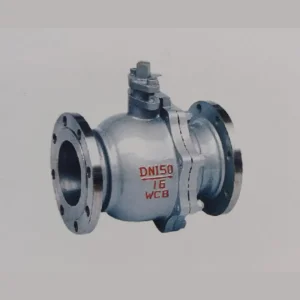
In modern fluid management and industrial process piping, the demand for components that combine structural durability with service convenience is paramount. The True Union Ball Valve (TUBV) represents a critical evolutionary leap in polymer engineering, offering a unique configuration that allows the central valve body to be completely isolated and removed from the pipeline system without cutting or disrupting adjacent piping.
Unlike conventional monolithic ball valves, which require systemic shutdown and extensive labor to repair or replace, the true union architecture integrates dual union nuts at the inlet and outlet ports. These nuts compress an elastomeric O-ring against the carrier face, establishing a highly reliable, bubble-tight seal. This design is highly critical in continuous-flow processing plants, semiconductor cleanrooms, chemical dosing units, and municipal wastewater treatment systems, where maintenance downtime translates directly to operational losses.
Globally, the market is undergoing a structural shift. Historically, stainless steel and exotic metal alloy valves were the standard for handling aggressive media. However, modern polymer sciences have introduced high-grade thermoplastics like U-PVC (Unplasticized Polyvinyl Chloride), C-PVC (Chlorinated Polyvinyl Chloride), PP-H (Homopolymer Polypropylene), and PVDF (Polyvinylidene Fluoride). These materials boast exceptional chemical resistance, are immune to electrochemical oxidation (corrosion), and dramatically lower the overall structural weight of the pipeline infrastructure.
Selecting the correct thermoplastic compound requires an understanding of chemical compatibility, temperature thresholds, and mechanical stress curves.
U-PVC (Unplasticized Polyvinyl Chloride): The most widely utilized compound for general-purpose applications. It operates optimally between 0°C and 60°C and is highly resistant to acids, alkalis, and salts, though unsuitable for aromatic hydrocarbons.
C-PVC (Chlorinated Polyvinyl Chloride): Formulated with a higher chlorine content, raising its thermal limit to 95°C. This makes it ideal for hot corrosive acids, metal plating processes, and steam condensate lines.
PP-H (Polypropylene Homopolymer): Offers excellent impact strength and superior chemical resistance in alkaline and non-oxidizing acid environments up to 90°C. It is the material of choice for industrial water treatment and high-salinity marine environments.
PVDF (Polyvinylidene Fluoride): The ultimate high-purity, high-strength fluoropolymer. It features an operating range of -40°C to 140°C, resistance to halogens (like wet chlorine gas), ozone, and strong oxidizing agents, making it indispensable in pharmaceutical production and semiconductor fabrication.
China's manufacturing centers have evolved from low-cost casting foundries to advanced automation-driven hubs. The production of True Union Ball Valves demands extreme dimensional tolerance; even a micro-millimeter deviation in the injection-molded buttress threads of the union nut or the sphericity of the central ball can lead to catastrophic seal failure under hydrostatic loads.
Chinese factories have integrated high-tonnage precision CNC injection molding presses, automatic multi-axis machining lathes, and robotic optical inspection systems. This level of automation ensures that every production batch—whether it consists of 500 units or 50,000 units—maintains absolute physical and structural consistency.
Furthermore, the industrial ecosystem in China provides unmatched supply chain vertical integration. From raw polymer synthesis and masterbatch formulation to the compression molding of PTFE (Teflon) valve seats and the synthesis of EPDM or FKM (Viton) O-rings, every link of the supply chain is co-located. This proximity eliminates logistical lag, lowers transport emissions, and allows manufacturers to offer competitive pricing without sacrificing compliance with international standards such as ASTM D1784, ISO 16135, and NSF/ANSI 61.
Every valve undergoes strict shell and seat pressure testing in accordance with ISO 9393 and ASTM F1970 standards. Valves must demonstrate zero bubble-tight leakage under 150 PSI (PN10) or 232 PSI (PN16) test pressures prior to packaging.
Designed with elastomeric backing cushions behind the PTFE seats. This ensures constant seal pressure on the ball, compensating for wear and material expansion/contraction across broad thermal cycles.
For smart plant integration, industrial valves come equipped with an integrated ISO 5211 mounting pad. This permits direct connection to electric or pneumatic actuators without specialized bracket adapters.
Established in 2003 | Global Engineering Partner
For over two decades, Shaanxi Kerlimar Engineers Co., Ltd. has stood at the intersection of international trade, heavy metallurgy, and cutting-edge environmental technology. Established in 2003, our corporate path has expanded from supplying high-performance carbon steel, alloy steel, and stainless steel seamless and welded piping systems to pioneering the integration of renewable energy technology within heavy industry.
Recognized as a national High-tech Enterprise in December 2020, Kerlimar has consistently driven technological development. Our research and development initiatives, spearheaded by Chairman Mr. Ming SUN, have led to key breakthroughs in new vertical axis wind power technologies. This research focuses on solving clean energy bottlenecks, including rail maglev, land floating, grid structures, and cable suspension mechanisms.
Our engineering strength has earned international validation. In June 2021, Kerlimar was invited to participate in the China-Finland High Technology Match Conference. In August 2022, we competed in the 11th China Innovation and Entrepreneurship Competition, winning the prestigious Excellence Award.
Furthermore, our dedication to combating climate change and reducing carbon output led to an invitation to present our tech at the Dubai COP28 Conference in December 2023. Our current 10KW-500KW vertical axis wind turbine systems offer high reliability, safety, and easy control, helping industrial processes lower their carbon footprint.

True Union Ball Valves are crucial for demanding applications where reliability and ease of maintenance are non-negotiable. Below are several localized industrial environments where these components prove their value:
In facilities that handle highly concentrated hydrochloric acid, sulfuric acid, and alkaline chemicals, metal valves suffer from high corrosion rates and require frequent replacement. A C-PVC or PVDF True Union Ball Valve equipped with FKM O-rings provides long-term chemical resistance. Because these lines require regular cleaning to prevent crystallization and scale buildup, the true union design allows technicians to remove the valve, wash out the line, and replace the seals without tearing down the entire piping grid.
The manufacturing of micro-electronics demands ultrapure water (UPW) and chemical delivery systems completely free of metal ion contamination. PVDF True Union Ball Valves, assembled under ISO Class 5 cleanroom conditions, are used for these lines. The mirror-smooth interior surface of the PVDF material prevents bacterial colonization and particulate trapping, while the double union connections ensure swift servicing without compromising the high-purity environment.
Sea water desalination facilities utilize high-pressure reverse osmosis (RO) systems where chloride ion concentration corrodes standard grade steels (like 304 and 316 stainless). Under these high-salinity conditions, PP-H and U-PVC True Union Ball Valves offer a cost-effective, corrosion-proof solution. Their lightweight design also simplifies installation on elevated pipe racks, reducing structural reinforcement costs.
For international procurement officers and engineering firms, sourcing valves from China requires a structured vetting process to balance cost, quality, and compliance. Global supply chain strategies should prioritize the following parameters:
Compliance with Raw Materials: Ensure that the supplier uses 100% virgin resin (such as Lubrizol for CPVC or Solvay for PVDF). Re-granulated or recycled polymers degrade tensile strength, lower pressure ratings, and release impurities into the fluid stream.
Verification of Testing Standards: Request testing documentation certifying compliance with ASTM F1970 (standard specification for special engineered plastic pipe fittings) and NSF/ANSI 61 (drinking water system components). A reputable manufacturer should provide material test reports (MTR) and hydrostatic test sheets for every batch.
Actuation Readiness: When designing automated systems, procurement teams should specify valves with integral ISO 5211 mounting pads. This simplifies installation, as actuators can be mounted directly on the valve, reducing potential failure points.
The pipeline and flow control industry is undergoing a transition driven by carbon reduction goals and environmental regulations. Industrial manufacturing facilities are under pressure to limit their operational carbon footprint, which extends from the energy consumed during raw material extraction to the carbon profile of manufacturing processes.
In response to these trends, pioneers like Shaanxi Kerlimar Engineers Co., Ltd. are integrating renewable energy systems into the industrial sector. Our work on advanced vertical axis wind turbines aims to provide off-grid, localized green energy for manufacturing plants and processing facilities. By utilizing vertical axis designs that operate efficiently at low wind speeds, factories can offset their grid reliance, lowering their Scope 2 emissions and aligning their operations with global climate goals.
Answering critical engineering questions regarding the selection, installation, and optimization of True Union Ball Valves.
Complete your project procurement with our extended line of industrial pipes, anti-corrosion tubes, and high-performance valves.
 Kerlimar