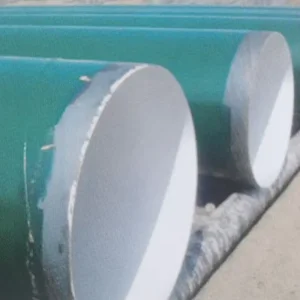
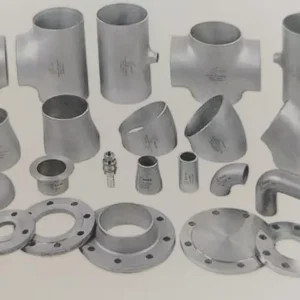
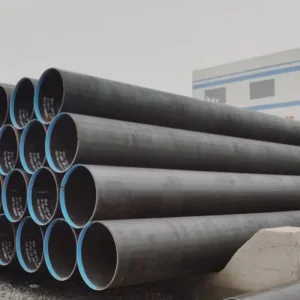
Explore our foundational range of heavy-duty casing, high-precision seamless configurations, and custom butt-welded fittings engineered for rigorous global deployments.
An in-depth metallurgical analysis of austenitic steel applications, chemical thresholds, and structural performance criteria.
Within the scope of mechanical engineering and fluid dynamics, the 2" 304 Stainless Steel Pipe serves as an industry benchmark for structural reliability. The material belongs to the austenitic family of stainless steels, distinguished by its high chromium-nickel content. The primary crystal matrix is structured around an FCC (Face-Centered Cubic) lattice configuration, which ensures non-magnetic behavior in the annealed state and outstanding toughness across wide temperature spectrums, from cryogenic states up to 800°C (1472°F).
The core chemistry relies on the synergistic relationship between Chromium (18.0% - 20.0%), which creates an instantaneous passive layer of chromium oxide ($Cr_2O_3$), and Nickel (8.0% - 10.5%), which stabilizes the austenite phase and suppresses the ductile-to-brittle transition. This makes the 2-inch configuration particularly suited for process plants where structural integrity and system pressure must remain consistent under dynamic flow conditions.
| Chemical Element | Standard 304 (UNS S30400) | Low-Carbon 304L (UNS S30403) | Role in Mechanical Alloy |
|---|---|---|---|
| Chromium (Cr) | 18.00% - 20.00% | 18.00% - 20.00% | Passivation & Oxidation Resistance |
| Nickel (Ni) | 8.00% - 10.50% | 8.00% - 12.00% | Austenite Stabilization & Impact Toughness |
| Carbon (C) | 0.08% max | 0.03% max | Prevents Intergranular Carbide Precipitation |
| Manganese (Mn) | 2.00% max | 2.00% max | Deoxidizer & Tensile Properties Enhancer |
| Phosphorus (P) | 0.045% max | 0.045% max | Improves Machinability & Yield Strength |
| Sulfur (S) | 0.030% max | 0.030% max | Controlled for Weld Cracking Prevention |
A standard 2" nominal pipe size (NPS 2) has an outer diameter (OD) of 2.375 inches (60.33 mm). Wall thickness varies systematically based on the Schedule designated (e.g., Schedule 10S, 40S, or 80S). For high-pressure process pipelines, Schedule 40S provides a wall thickness of 0.154 inches (3.91 mm), creating an optimized ratio between weight, cost, and maximum allowable working pressure (MAWP) as calculated via ASME B31.3 codes.
The mechanical performance metrics of Shaanxi Kerlimar's 304 piping ensure that they satisfy both elastic limit design criteria and yield parameters:
Driving the frontier of next-generation alloys and structural components for demanding smart infrastructure applications.
By executing ultra-fine micro-alloy modifications, we incorporate trace levels of nitrogen into the FCC lattice. This increases yield strength by up to 20% without compromising ductility, bridging the mechanical performance gap between standard 304 and expensive duplex steels.
Leveraging environmental electro-chemical polishing alongside organic-metallic polymer coats, we ensure that the passivated chrome-oxide barrier remains structurally continuous under high shear stresses from abrasive fluid flows.
Aligned with Shaanxi Kerlimar's corporate sustainability objectives, our research roadmap target includes utilizing 85%+ post-industrial recycled steel feedstock melted in high-efficiency Electric Arc Furnaces (EAF) powered by localized clean energy arrays.
Pioneering high-durability metallurgical supply chains and sustainable engineering since 2003.
Established in 2003, Shaanxi Kerlimar Engineers Co., Ltd. has stood as a primary pillar of global industrial distribution, specializing in ASTM, ASME, EN, and JIS compliant piping solutions. From carbon steel, alloy matrices, to high-performance austenitic stainless steel grades, Kerlimar supplies raw seamless pipes, longitudinal welded variants, spiral welded pipes, and matched precision fittings.
Under the visionary leadership of Chairman Mr. Ming SUN, a dedicated environmentalist and champion of technological integration, Shaanxi Kerlimar has diversified its expertise into clean energy infrastructure. Since 2019, the firm has researched and developed advanced vertical-axis wind turbine designs to help heavy industrial sectors reach carbon neutrality. This focus has secured over 40 national patents and multiple international recognitions, showcasing Kerlimar’s unique ability to blend high-performance metallurgy with ecological stewardship.
In recognition of our research, Kerlimar earned China's High-Tech Enterprise certification in December 2020 and won the Excellence Award in the 11th China Innovation and Entrepreneurship Competition. In 2023, Kerlimar was invited to present its solutions at the Dubai COP28 Conference, reinforcing our role in driving global green industrial transformation.
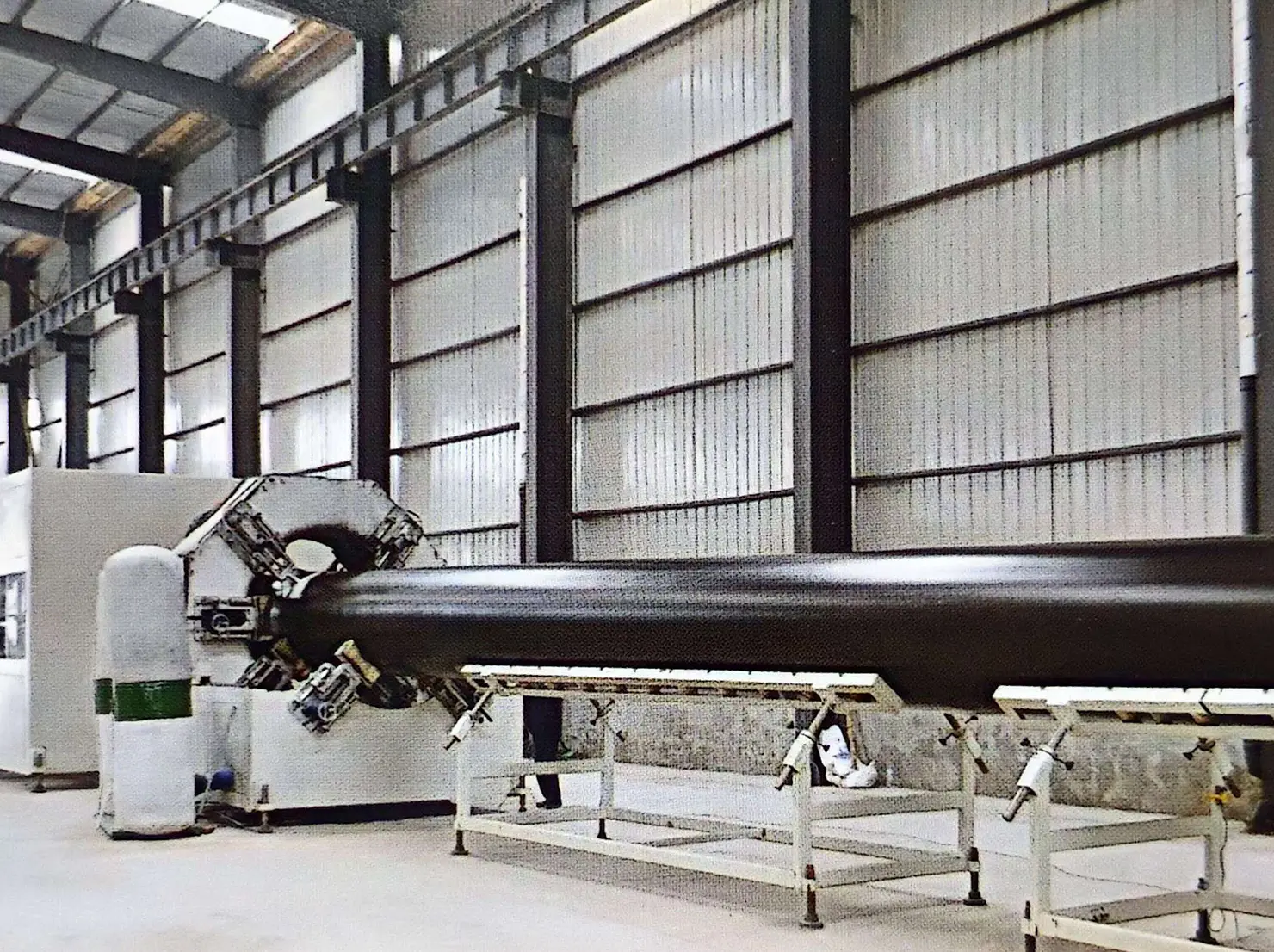
Deploying reliable fluid systems, high-stress piping networks, and structural support modules across major global industries.
Providing high-yield corrosion resistance to sulfur-bearing crude compounds, organic acids, and extreme hot hydrocarbons. 304 stainless steel pipes prevent sulfide stress cracking in refinery heat exchangers and secondary flow systems.
Ensuring clean drinking water standards via chemically inert piping that resists oxidation. The high chromium passivated layer prevents bio-film accumulation and particulate erosion at high municipal flow rates.
Delivering smooth interior finishes (roughness Ra < 0.8 µm through electro-polishing) that eliminate particulate nesting. This facilitates standard Clean-in-Place (CIP) sanitization cycles with nitric and phosphoric acid washes.
Maintaining high structural stability under cryogenic temperatures (-196°C) for LNG logistics, liquid hydrogen storage, and structural components of large-scale renewable generation installations.
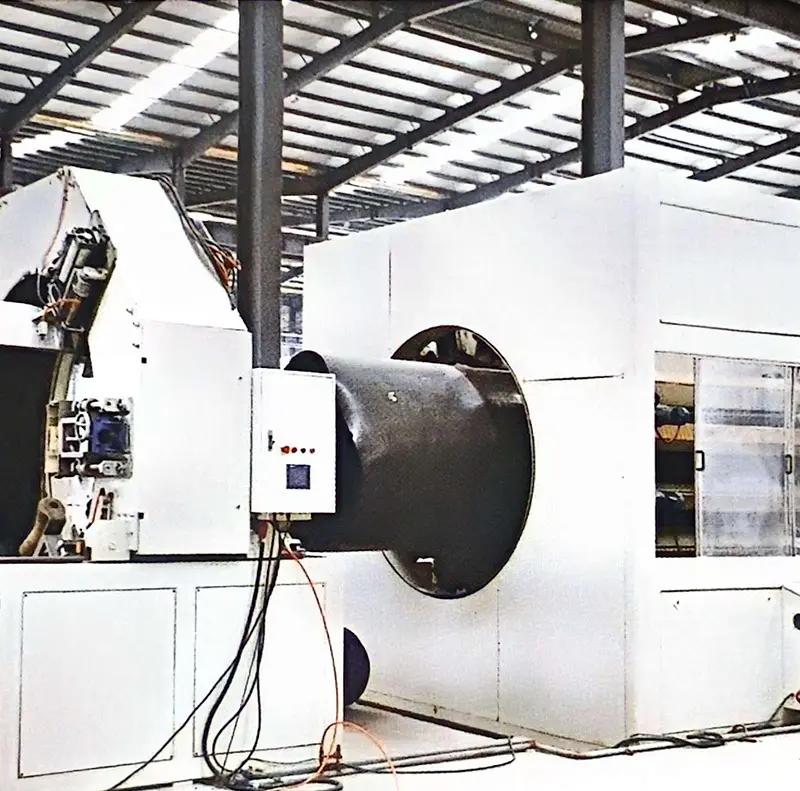
Integrating digital manufacturing platforms to ensure traceable quality and delivery precision.
Shaanxi Kerlimar utilizes modern production networks that combine metallurgical manufacturing with automated supply chains. Through our Factory 4.0 framework, every step of the 2-inch stainless steel pipe manufacturing process—including cold drawing, high-speed extrusion, solution annealing, and multi-stage testing—is monitored in real time.
Our Quality Management Systems (QMS) automatically track heating profiles, chemical ratios, and physical dimensions. The process uses automated Eddy Current Testing (ECT) and Ultrasonic Testing (UT) arrays to check the internal and external integrity of each pipe, ensuring complete compliance with ASTM A312 specifications before shipment.
This digital tracking system allows Shaanxi Kerlimar to streamline logistics and production scheduling. By optimizing resource use and lowering energy consumption per metric ton, we offer global procurement teams consistent quality, shorter lead times, and competitive pricing.
Ensuring global engineering standards are met through comprehensive mechanical, chemical, and pressure testing protocols.
Procuring raw piping systems for high-pressure operations requires strict adherence to international standards. Shaanxi Kerlimar's production pathways comply with key global standards, including ASTM A312 (standard specification for seamless, straight-seam welded, and heavily cold worked austenitic stainless steel pipes), ASME SA312, EN 10216-5 (European pressure vessel standard), and JIS G3459.
To meet international compliance demands, our 304 stainless steel pipes undergo a rigorous quality verification process before leaving the factory:
| Standard Category | Compliance Standard | Core Application Focus Area | Verification Test Requirements |
|---|---|---|---|
| North American | ASTM A312 / ASME SA312 | High-temperature and general corrosive service | UT/ECT, Hydrostatic, Tension, Flattening, Intergranular Corrosion Tests |
| European Union | EN 10216-5 / EN 10217-7 | Pressure vessels, chemical pipes, boiler systems | Impact testing at -196°C, chemical check, dimensional tolerances |
| Asia-Pacific | JIS G3459 | Corrosion resistance, low & high temp processing | Weld joint efficiency check, macro structure inspections, hydraulic test |
Find answers to common technical, material, and logistical questions regarding 304 stainless steel piping systems.
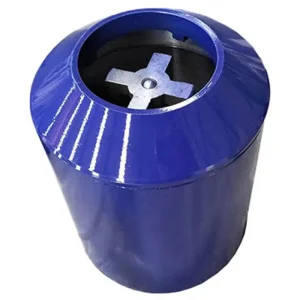
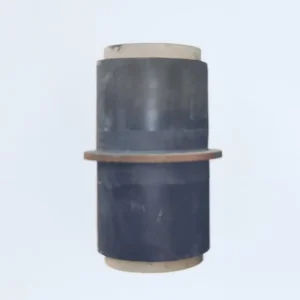
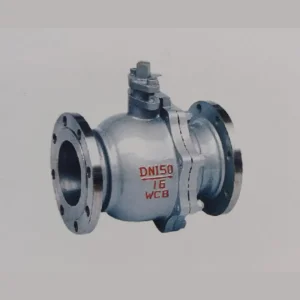
Explore our selection of specialized engineering items, including high-insulation thermal control lines, cement shoes, and corrosion-resistant valves.
Developing next-generation vertical axis wind power technologies to support society's green energy transition.
Recognizing the energy-intensive nature of industrial manufacturing, Chairman Mr. Ming SUN launched our clean energy technology research and development program in 2019. This initiative focuses on vertical-axis wind turbine designs, aiming to address common challenges in wind energy through innovations in suspension, grid structures, rail magnetic levitation, and land-based floating systems.
We have successfully completed testing for small units in the 10KW to 500KW range. This technology is designed to offer high efficiency, lower installation costs, high reliability, and straightforward operation. It is part of our commitment to supporting rural revitalization, local energy independence, and carbon reduction initiatives.
By integrating clean energy designs directly with our metal processing operations, Shaanxi Kerlimar continues to support global decarbonization efforts while maintaining our focus on high-quality steel production.

 Kerlimar