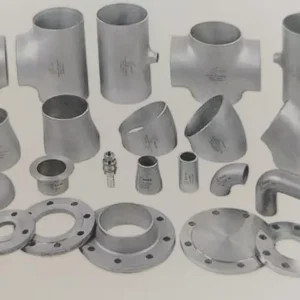
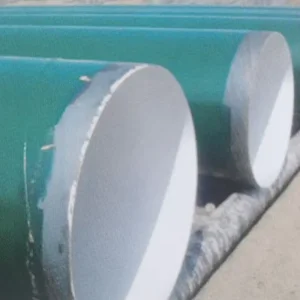
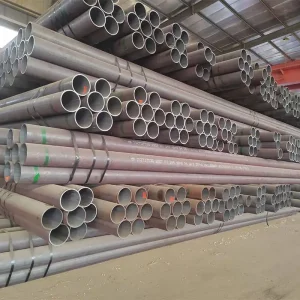
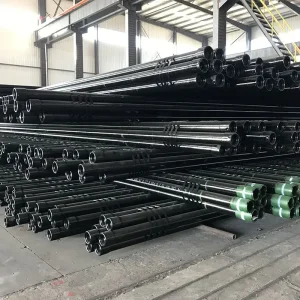
Established in 2003, Shaanxi Kerlimar Engineers Co., Ltd. has spent over two decades cementing its status as an international powerhouse in metal piping systems. Our extensive portfolio specializes in heavy-duty carbon steel, high-performance alloy steel, and corrosion-resistant stainless steel seamless pipes, straight-seam welded pipes, spiral welded pipes, and matching precision-crafted pipe fittings. Every component we fabricate conforms precisely to top international manufacturing standards, including ASTM, ASME, EN, and JIS.
Operating under the philosophy of engineering excellence, competitive pricing structures, strict compliance with delivery timelines, and proactive customer service, we act as a strategic partner to major engineering, procurement, and construction (EPC) companies worldwide. Our industrial footprints span heavy refineries, offshore rigs, and modern energy distribution lines.
ASTM A106 (also covered under ASME SA106) is the standard specification for seamless carbon steel pipe for high-temperature service. This specification covers seamless carbon steel pipe for high-temperature service in NPS 1/8 to NPS 48 inclusive, with nominal (average) wall thickness as given in ASME B36.10M. It is crucial to highlight that ASTM A106 pipes are specifically designed for applications where high temperature and high pressure converge, requiring unique tensile and chemical characteristics compared to standard ASTM A53 pipes.
The manufacturing process demands "killed steel", which means the steel is fully deoxidized during casting by adding silicon or aluminum. This eliminates gas pockets and ensures uniform grain distribution and consistent mechanical performance across the entire pipe structure.
ASTM A106 is categorized into three primary grades: Grade A, Grade B, and Grade C. Each grade offers differing carbon and manganese ratios to balance structural weldability with tensile capabilities. Grade B remains the most commonly utilized material in industrial process pipelines, refineries, and power generation boilers due to its robust yield-to-tensile ratio.
| Chemical Elements & Properties | ASTM A106 Grade A | ASTM A106 Grade B | ASTM A106 Grade C |
|---|---|---|---|
| Carbon (Max %) | 0.25 | 0.30 | 0.35 |
| Manganese (%) | 0.27 - 0.93 | 0.29 - 1.06 | 0.29 - 1.06 |
| Phosphorus (Max %) | 0.035 | 0.035 | 0.035 |
| Sulfur (Max %) | 0.035 | 0.035 | 0.035 |
| Silicon (Min %) | 0.10 | 0.10 | 0.10 |
| Tensile Strength (Min, psi / MPa) | 48,000 / 330 | 60,000 / 415 | 70,000 / 485 |
| Yield Strength (Min, psi / MPa) | 30,000 / 205 | 35,000 / 240 | 40,000 / 275 |
China's industrial steel ecosystem offers unprecedented manufacturing integration. Purchasing carbon steel pipes directly from Chinese factories yields structural advantages across multiple vectors:
Chinese steel mills operate in localized clusters, uniting raw iron ore sourcing, billet smelting, hot piercing, and heat treatment in close proximity. This slashes logistical overheads and allows immediate processing adjustments.
Modern factories utilize automated online Ultrasonic Testing (UT), Eddy Current testing, and hydrostatic pressure testing systems that comply with API 5L and ASTM standards to guarantee zero-defect integrity.
Factories provide certified Mill Test Reports (MTR) according to EN 10204 3.1 or 3.2, ensuring tracebility, chemical analysis verify, mechanical test results, and hydrostatic test records.
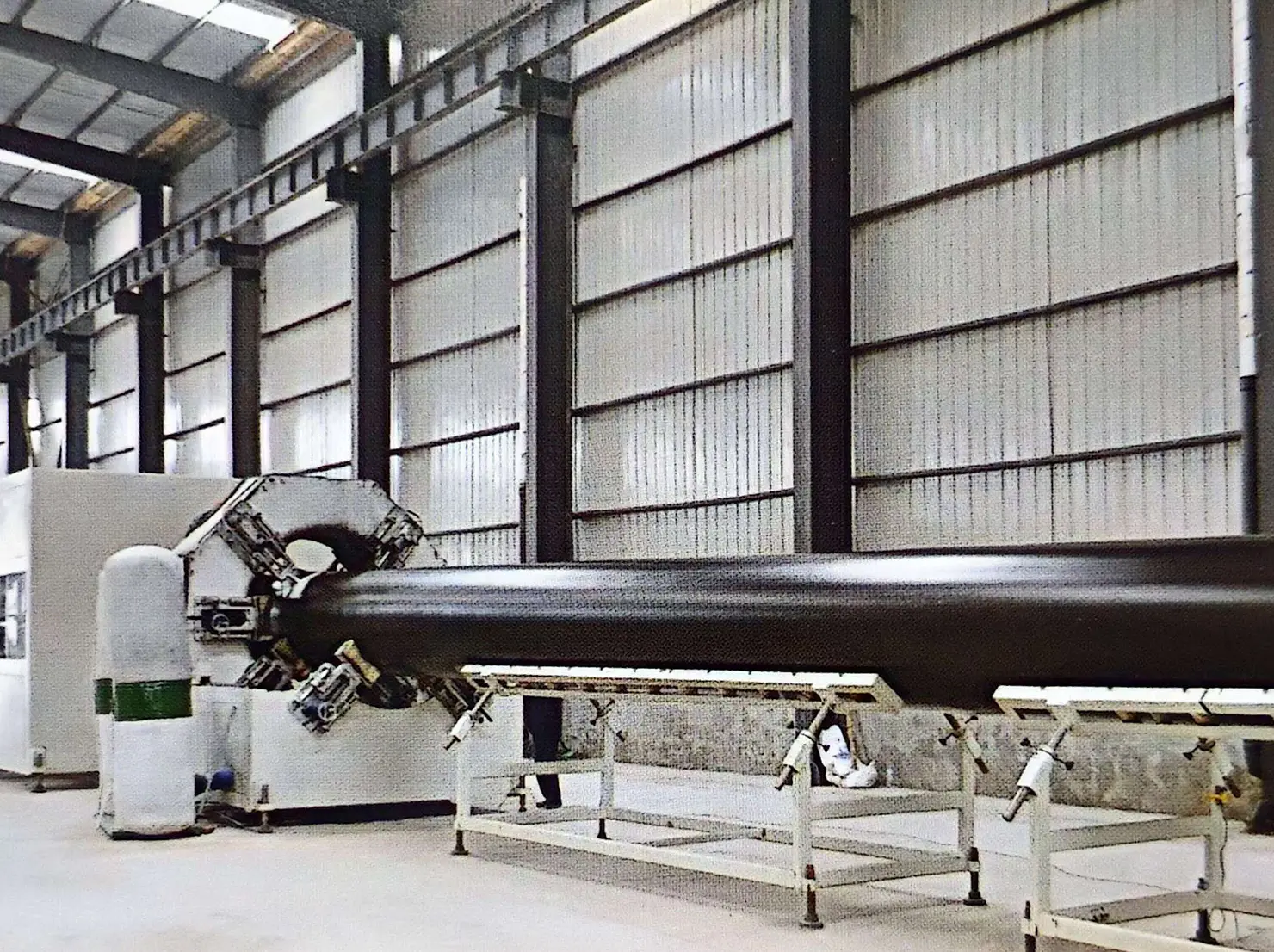
Our chairman, Mr. Ming SUN, is a dedicated environmentalist and an advocate for breakthrough technological innovation. Under his guidance, Shaanxi Kerlimar Engineers Co., Ltd. has integrated environmental protection and decarbonization strategies into its core operational model. Recognizing the global impact of climate change, the firm launched a clean energy technology research and development division in 2019.
This division focuses on revolutionary vertical axis wind power technologies. Aimed at solving traditional wind energy bottlenecks, Kerlimar's R&D targets suspension systems, grid structures, rail magnetic levitation (maglev), land-floating, and deep-sea floating systems. The State Intellectual Property Office has authorized more than 40 patents to our company, alongside multiple international patent grants, reflecting our strong focus on green engineering.
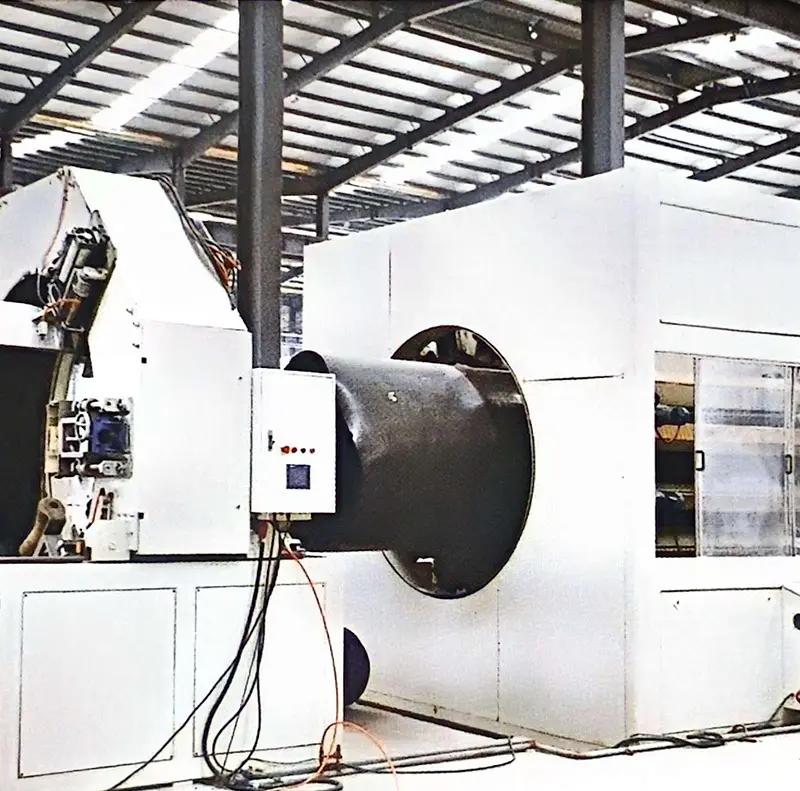
In December 2020, Shaanxi Kerlimar Engineers Co., Ltd. earned China's prestigious National High-Tech Enterprise certification. This milestone was followed by an invitation to participate in the China-Finland High Technology Match Conference in June 2021. In August 2022, the company won the Excellence Award in the 11th China Innovation and Entrepreneurship Competition. In December 2023, the global recognition of our green initiatives culminated in our invitation to participate in the landmark Dubai COP28 Conference.
Currently, the company has completed landing experiments for 10KW-500KW series vertical wind turbine units. Characterized by high efficiency, low operational cost, high reliability, and simple control structures, this technology serves as a key pillar in achieving global dual-carbon targets and supporting the goal of holding temperature rises below 1.5°C.

ASTM A106 Carbon Steel Pipes are critical for various high-temperature, high-pressure industrial applications.
In modern refining plants, crude oil undergoes catalytic cracking at high temperatures. ASTM A106 Grade B pipes ensure leak-free handling of hot hydrocarbons and steam without degradation.
Superheated steam boilers operate at high temperatures. These pipes are used for water wall panels, superheaters, and main steam lines, providing long-term structural integrity.
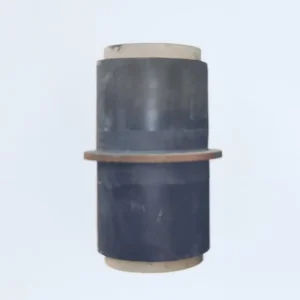
Used for municipal heating or industrial steam distribution networks. Integrating A106 pipes with polyurethane insulation and outer jackets minimizes thermal loss across long distances.
For international buyers, sourcing ASTM A106 seamless carbon steel pipes involves navigating strict technical compliance guidelines. A sound procurement strategy should evaluate the following factors:
A: The primary differences lie in their application focus, chemical compositions, and manufacturing methods. ASTM A106 is designed specifically for high-temperature and high-pressure service, and is always manufactured as a seamless pipe. ASTM A53 is a broader standard for general-purpose applications (water, gas, air, steam) and can be manufactured either as welded (ERW) or seamless. Metallurgically, A106 contains silicon (minimum 0.10%) to ensure it is "killed," which increases its structural resilience at high temperatures, whereas A53 does not require silicon.
A: Yes, ASTM A106 Grade B has good weldability. The maximum carbon equivalent is managed to prevent cracking in heat-affected zones. Standard welding methods like GTAW (Tig), GMAW (Mig), and SMAW (Stick) are commonly used. For thick-walled pipes, pre-heating and post-weld heat treatments (PWHT) are recommended to relieve residual stress.
A: ASTM A106 Grade B pipes are suitable for service temperatures up to 800°F (427°C). Beyond this temperature, carbon steel starts to undergo graphitization, which weakens the microstructure. For temperatures exceeding 800°F, alloy steel pipes (such as ASTM A335 Chrome-Moly grades) are recommended.
A: We operate under a rigorous quality management system certified to ISO 9001 standards. Each pipe batch undergoes spectroscopic chemical analysis, mechanical testing (tensile, yield, elongation), flattening/bending tests, and 100% hydrostatic and ultrasonic testing. All shipments are accompanied by comprehensive Mill Test Certificates conforming to EN 10204 3.1.
A: In sour service environments where Hydrogen Sulfide (H2S) is present, standard carbon steel pipes may experience Hydrogen-Induced Cracking (HIC) or Sulfide Stress Cracking (SSC). For these scenarios, the chemical composition of the ASTM A106 Grade B steel must be specially treated and tested in accordance with NACE MR0175 / ISO 15156 standards.
A: We offer a variety of external and internal coatings to prevent corrosion. These include bare oiling, black paint varnish, hot-dip galvanizing, 3-layer polyethylene (3LPE), 3-layer polypropylene (3LPP), and Fusion Bonded Epoxy (FBE) coatings, depending on the environment in which the pipes will be installed.
 Kerlimar